Fabulous and Fun Fiction and Non-Fiction Ideas for Spring


Hey everyone! It's Bex from Reading and Writing Redhead! Are you looking for some new ideas for literature for your primary classroom or homeschooling this spring? Need some new activities and resources for language arts! I have rounded up some for you right here in the post! 

First let's start with some book ideas and then if you keep reading I will share some resources at the end! 


Let's start with a collage of some great books to try!


Lets break down the books! Please comment below and let us know if you have used them, which is your favorite, and what resources you'd recommend - or if you have additional ideas for literature! Click on any title and it should take you to the resource at Teachers Pay Teachers, a blog, or  website with more info.


The Best Nest by  PD Eastman: This is an oldie but goodie as my mom would say. My friend's 6 year old loves it. While not strictly about spring, we know birds build nest and eggs hatch in spring, and the funny story of a pair of birds search for a better nest is adorable! 

Planting a Rainbow by Lois Ehlert: A colorful and fun realistic fiction story that children can learn from tells the simple tale of planting and waiting for seeds to grow into flowers.

The Tiny Seed by Eric Carle: Of course you all know this one - the tiny seed is the only seed to survive the elements and make it to grow into a tall beautiful flower.

In Like a Lion Out Like a Lamb  by Marion Bauer:  Fun rhymes and a literal adventure of a lion and lamb during the month of March. Why didn't someone think of this before? 

Bear Wants More by Karma Wilson: The adorable Bear wakes up from spring thin and hungry. The Pictures are fun, colorful and full of energy!

Make Way for Ducklings by Robert McClosky: Gorwing up just a few miles from Boston, where this book is set means  a lot to me! If you have not read it, get going! The mallards search for a safe place in Boston to build their nest and raise their young. Will it be the Public Gardens, somewhere on the Charles River, the Back Bay, near the Capitol building?

Caterpillar Spring, Butterfly Summer  by Susan Hood: A fun, colorful pop up book for very young children that teaches about metamorphosis.

The Thing about Spring by Daniel Kirk: Rabbit loves winter and is sad to see it go but is learning why spring is wonderful too from his animal friends.  

Miss Rumphius by Barbara Cooney:  A beautiful story about a woman who made  a difference by spreading lupine seeds - a colorful sign of spring.

Weather in Spring by Martha Rustad: Recommended by a first grade teacher! Get your non-fiction weather facts about spring here.

The Golden Egg Book by Margaret Wise Brown: Do you know this classic? A little bunny finds an egg and waits to see what is inside!

The Reason for a Flower by Ruth Heller: 48 pages of kid friendly but scientifically accurate information about bugs, plants and animals!

Cherry Blossoms Say Spring: This National Geographic book looks at both the life cycle of a cherry tree and also at the history of how the trees came to Washington, DC. A neat way to combine science and history!

Its Spring by Susan Swan: Unique cut paper pictures with hand drawn illustrations make this a fun scavenger hunt of sorts!

Spring by Tanya Thayer : Recommended for pre-K age students- it is a nice introduction to how and why the seasons change.

Animals in Spring by Martha Rustad: A companion to Weather in Spring it would go well with your science program if you are learning about animals or weather! 

Let it Rain by Maryann Cocca Leffler: Another good choice for Pre-K students and maybe kindergarteners, this is a rhyming book with playful pictures and tells of many fun spring activities.  

Frog and Toad All Year by Arnold Lobel: Of course not just about spring, but this book has a super cute story about spring being "just around the corner".

So now you have some spring literature ideas- I rounded up some FREE resources from some of your favorite teacher bloggers!


Frog and Toad Long and Short Vowel Sort by Differentiation Station Creations: Would be great to accompany Frog and Toad and if you are working on vowels. 

  
St Patricks Day Literacy and Math Printables by Mrs W- Great if you are trying to get in some literacy activities for the first spring holiday! Includes work on syllables, word families, and a writing prompt

Life Cycle of a Ladybug by Michelle Griffo: Pretty self-explanatory but might be a nice follow-up to reading about spring insects and animals or learning about the life cycle of a caterpillar or even plant life cycles!

Do the Bunny Hop- a cvc Word Game  by Mrs Roltgen: Get your CVC practice in with a fun bunny theme.


Spring Sentence Scramble Puzzle Freebie by Teaching with love and Laughter: Great for grades K and 1!


The Tiny Seed Song  by Libby Loves Learning: a fun, free song you can sing after reading the story.

Tiny Seed Word Wall by Miss Glitter McGlitterstein

Tiny Seed Literacy Unit by Kinderplans

Here is a paid resource from Cathy Collier - The Wise Owl - but you can download the free preview and see if the full product would work for you: Combined Spring CVC Card Sort

Blogging Basics


Good morning, Literacy Fans!

Today is not a literacy post, but a post to send out some blogging basics.

"Why?" you may ask!

Today four Literacy Land ladies will be presenting at the Virginia State Reading Association Conference, and we want to share our presentation with all of our readers!
10557354_10204414991761881_6567337917658754878_n.jpg
Melissa, Andrea, Jessica, and Carla
We are helping other teachers see the benefits of blogging and started on their own blogs.  If you love reading blogs and are ready for the challenge, you don't want to miss this!

So, click {here} or on the picture below to grab your copy!

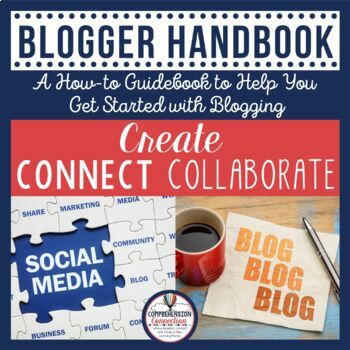
You can also grab a copy of today's handout, Becoming a Blogger from Carla's from Comprehension Connection's store by clicking {here} or on the image below.
Becoming a Blogger-A How-to Guide to Blogging with Blogger


Using Poetry to Teach Figurative Language


Hi! It's Melissa from Don't Let the Teacher Stay Up Late.


We are rounding up third nine weeks here in Virginia while trying to catch up from three weeks of snow with only 6 instructional days spattered in between. Fortunately two of our final skills before review for fifth grade make for a perfect pairing: figurative language and poetry.

I don't know why we haven't already structured our pacing guides to just teach them together, but our school has unofficially done this. Students really struggle with both skills, so I love being able to spend extra time in each to really hit it hard.

Personally, I feel like the most important thing when teaching figurative language is that students can recognize it and begin to understand what it means. I do teach them the different types, and we go over definitions and examples, but I'm not too concerned if they have trouble naming it when they see it. I did create a quick figurative language booklet (the pink book below) for my students to use as a reference. You can read about it on my blog here.


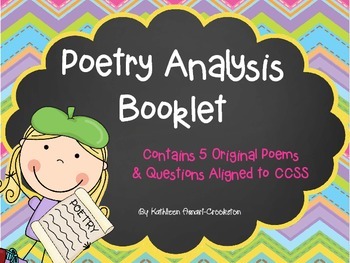
Really, though, that booklet was just to prepare them for poetry analysis. I found this gem last year from Middle Grades Maven and feel like it's one of the best resources I have bought. You can use any poem or song, though. I know Erin from I'm Lovin' Lit uses a lot of popular songs to teach it, and I think that's an awesome resource, too!

 Poetry Analysis Booklet

I like this resource because the poems are short and simple, but the students are then challenged to find different types of figurative language AND EXPLAIN WHAT IT MEANS! Don't miss that. I feel like some teachers will use poems or songs to have the students find the figurative language, but then they move on. What's the point in identifying it if they still don't understand why the author said it? We spend a lot of time discussing why those specific phrases were used, which also covers author's craft without the students realizing it.


My favorite thing about this booklet, though, is that it helps relieve some of the anxiety my students tend to have when they see poetry. Poems are consistently tough when I look at test data, and I will do anything I can to try and help them along the way.

After we have finished the booklets (we're a little behind because of the snow), I want to find some longer and more difficult poems for them to explain. It would also be fun to have students try to mimic some of these poems to create their own. Poetry month is just around the corner. The possibilities are endless!

What plans do you have for poetry month?


New Ways to Use Reading A to Z

Do you have a Reading A to Z subscription? If not, we'd highly recommend it. This post shows some of the options available if you project the materials on a Smartboard.

Hello Literacy Lovers!  I hope your part of the world is looking better than mine! Virginia is looking rather dreary with rain, ice, and snow in the forecast today. However, sunny days are coming outside and hopefully, this post will brighten your day too!

The Learning A to Z company has put together some phenomenal programs to help our students with literacy learning, and I thought I'd share a few ways that I've used Reading A to Z with my students. The projectable books work so well for modeling reading skills, and hopefully, these ideas will help you make use of the little tools that they've included. If you do, I think you will find that the subscription is well worth the price.

Emergent Readers
The projectable feature is fantastic for modeling Concept of Word, practicing letter recognition and sounds, modeling strategies such as using picture clues and decoding, and comprehension.  
Do you have a Reading A to Z subscription? If not, we'd highly recommend it. This post shows some of the options available if you project the materials on a Smartboard.

My favorite thing to do with Kinders is to work on developing concept of word with the stampers. The kids love dragging the stamps in place, and we practice touching them as we read. In the picture above, I placed them under each word, but you can also use a different stamp to signal the beginning of each word for the student to "Get their Mouth Ready".
Do you have a Reading A to Z subscription? If not, we'd highly recommend it. This post shows some of the options available if you project the materials on a Smartboard.
The tool kit also includes a pen (with different colors), highlighters, a cover box, and a text box tool. In this image, I matched the picture clue with the word in the text. You could also add the text box to the side to brainstorm rhyming words for sun, pop, and up.

Beginning Readers
With beginning readers, we focus on building decoding skills and fluency, so teachers can use the projectable feature to record student thinking and observations. With guiding questions and think aloud, students will work to apply Word Study into their work with running text.
Do you have a Reading A to Z subscription? If not, we'd highly recommend it. This post shows some of the options available if you project the materials on a Smartboard.
In this screenshot, I listed words from the -an word family (and the teacher would record them in the text box). The follow up questions demonstrate that the long o sound can be formed with more than one spelling pattern and can also be used to review patterns. I used the arrow tool for the first question and switched stamps for the second question. Through this application, students are analyzing each word and making comparisons to find the words that fit the criteria.  
Do you have a Reading A to Z subscription? If not, we'd highly recommend it. This post shows some of the options available if you project the materials on a Smartboard.
In addition to working on decoding and word study skills, teachers can use the tools for many comprehension skills. In this example, I asked what students visualize when they read this paragraph, and I'd have students pair/share or draw what they picture.  Then, as a group, we'd highlight the text evidence that helps us make that mental picture. Can you think of other options for the text box, cover tool, and highlight? Maybe cause and effect relationships in fiction or perhaps using context clues for vocabulary. If you cover the picture, then students would have to rely more on the text to determine the word meaning.

Transitional Readers
Students at the transitional level are building fluency. The projectable feature can be used for modeling phrasing and observation of punctuation. There are multiple highlight colors, so I have marked the phrases with different colors or used the drawing tool to add slashes where each phrase ends. There is a stop sign that can be stamped on for punctuation, but the highlighter may be preferred due to the size of the stamp in comparison to the size of the font. Reading A-Z also has poetry available that can be projected for the same purpose.

The cover tool can be used to cover up or select key information for vocabulary discussion or for challenging words that need decoding.  
Do you have a Reading A to Z subscription? If not, we'd highly recommend it. This post shows some of the options available if you project the materials on a Smartboard.
In this image, students could use the frame tool to show the white part of the bulb or the small green shoots that are coming up to the sides of the flower.  
Do you have a Reading A to Z subscription? If not, we'd highly recommend it. This post shows some of the options available if you project the materials on a Smartboard.

Finally, transitional readers are ready for Close Reading. This text is actually at a higher level, but you can see how the star stamp is used to mark the main idea, and the arrow tool is used to mark an important detail. Students can annotate in the margins as well as use the highlighter tool to locate text evidence to support thinking with group discussion.*Note that the projectable feature can only be used for modeling. Teachers can use the printable books for students to practice on their own with all levels.

Instructional Readers
By fourth grade, most students have moved to the instructional reader stage, but the use of the projectable feature is not limited to comprehension only. Students at this stage need work with vocabulary development and writing. The Reading A-Z program includes graphic organizers that can be used by students in teams for group projects or to prepare for writing assignments related to the content.
Do you have a Reading A to Z subscription? If not, we'd highly recommend it. This post shows some of the options available if you project the materials on a Smartboard.

In this image, I used Close Reading strategies again and spotlighted the diagram modeling the word, atmosphere. Again, all of the tools and uses mentioned can be applied to work with strong readers too, especially with content area reading.

Reading A to Z offers a long list of nonfiction titles that can work very well for science and social studies instruction. All of the books can be projected, but teachers can also project graphic organizers, poetry, discussion questions, phonics posters, and more. If you have not explored the program and would like to give these ideas a try, you can sign up for a two week trial membership for free. Just click the Reading A-Z logo below which will take you to their enrollment page.  
I think this program is a bargain and probably one of the most versatile tools available to use right now. I hope you find this little tutorial helpful, and if you have come up with any teaching tricks you'd like to share with it, by all means, email me or comment. I love to learn new things too.  

Until next time, I'm sending warm thoughts your way! I think we're all ready for a little spring time weather here in the U.S.  

Pin for Later:

Do you have a Reading A to Z subscription? If not, we'd highly recommend it. This post shows some of the options available if you project the materials on a Smartboard.