A Shift in Intervention: 3 Ways To Get Your Students Working Harder Than You


Hey guys! Tara here from Looney's Literacy just popping in to share how my summer school program is going so far! We're working hard and having a blast!


I used to stress over my lesson plans to the point of almost having a script that I could read from directly.  I thought I had to have every moment planned and ready to go before my students walked in the door. I laugh at myself now because even back then I never followed the "script" I had planned.

I'm sure it's no different in the classroom but with my experience in an intervention setting I learned very quickly that flexibility is key to a successful classroom. For many years I thought I was being flexible and allowing my students to guide the lessons. I was able to go with the flow and could analyze thought patterns on the go. I was mastering pulling materials and teaching "in the moment." But there was still that part of me that was working harder then the kids. I was looking at teaching backwards. I was guiding the thinking and only using "closed questions," or questions that imply that there is a predetermined "correct" answer. It was driving me nuts because my kids weren't thinking critically and I couldn't understand why.

So I started studying Essential Questions: Opening Doors to Student Understanding  by Grant Wiggins and Jay McTighe. (It's a must read if your ready for your students to start working  harder then you). I'm not going to bore you with the logistics of my planning (You can find that post here later ;)) But I do want to share with you how this study has transformed my intervention program.

Ask Essential Questions

Just like I've always done, I began planning for my summer intervention program by collecting year end data,  analyzing each student's scores and determining appropriate standards. With this info in mind I decided to practice what I had been studying about asking essential questions.  Essential questions are open ended questions that cause conversations, encourage critical thinking and problem solving. 

I began by asking myself what was my goal for my students at the end of this three week program. I decided I wanted them to understand why we read and write, why it's important to understand words and how they work and how we can become better readers and writers. 

I created notebooks for them so that they could brainstorm and have graphic organizers to take notes during discussion.

Click here for your FREEBIE!

And most importantly, I created questions that would have them thinking critically while addressing my goals for them! 

The first day was hard! I figured out how often they rely on me to ask literal questions so I that I'd guide them to the "correct" answer. I got a lot of "I'm confused" and "This makes my head hurt." I knew immediately I was doing the right thing by answering them with "I don't know." or "What do you think?"

Have  Students Guide Their Lessons

This was tricky for me. Like I mentioned previously, I want to have everything planned. Now don't get me wrong. It is our job to build the structure  of our lessons. But that's not what makes a house a home. The floor plan, the walls, the nooks & crannies; that is what makes a home. So build your structure and let your students add the finishing touches. They take ownership and they gain critical thinking and problem solving skills. It's a win-win! 

My  goal for one of my older students this week was to understand the main character and his role in the theme of the story we read.  His interpretation of the theme was very literal as was his description of the character. So I asked him to decide how he could think more deeply about the main character and the theme. 


Have Students Self-Reflect and Assess Growth

This goes hand in hand with  students guiding their lessons. This is the step needed before they decide how they need to proceed to reach their goal. Student self-reflection can and should be a formative tool used to aid in offering effective feedback that will promote deeper thinking and problem solving skills. 

This can easily be done before a lesson or as an "exit ticket." I've given prompts to guide students in a particular direction and I've left it wide open to the students perspective of how they are doing, what they did well and what they need to work on. Both ways serve their own purpose and both can be beneficial. 

On that note, I'm going to sign off. I hope this finds you in a place that you might find some tips to help you in your classroom. 



BASAL doesn't have to be a bad word

Hello Literacy Land Readers and Followers!  I'm Deniece from This Little Piggy Reads.
BASALS
Today's topic might scare some of my fellow authors or make a few of our readers hit that X in the top right hand corner.  Hear me out, before you hit the X.

Basal has become a bad word in the literacy world.  I understand the argument and I fully believe that if kids aren't engaged & interested they aren't really reading, just calling words.  However, I'd like to explain why I used a Basal in my Reading Classroom. 

First and foremost, I taught in a school that gave me a basal & expected me to use it.  We have a library, but for the past 5 years schools in Texas were suffering from a budget crisis and simply didn't put money into buying new books.  Luckily, that seems to be changing.  Our students are very transient.  I looped with my 2nd graders to 3rd grade and out of 60ish kids, 24 of them were new to our school in 3rd grade.  So, although I had worked hard with my original 60, now I had a large chunk of kids who were reading below or WAY below grade level.  My final reason for using it was simply financial.  We didn't have class sets available and I didn't have the money to buy them.  Yes, I bought a class library for my students, but I simply couldn't purchase enough books for an entire school year.    

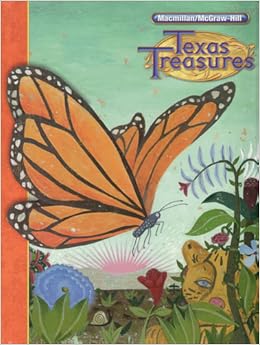
Our school adopted Treasures and I liked the program.  I made it work for me.  I loved their spelling and vocabulary programs.  I loved the online component and utilized it for my below readers and ESL students during stations/workshops.  The online story would highlight words as it read the story aloud.  I fully intended to flip my classroom using this component before I became a GT Specialist.  

I liked most of the stories in our basal; however, when I thought a story was boring or lacked engagement based on my student's interests I used the opportunity to include non-fiction, like magazine articles or online articles and a little poetry.  Since basal stories are short, you can run through the lesson cycle in one week. Our former Principal was ALL ABOUT the lesson cycle.  

Kick up your basal stories by making them meaningful to your students.  In the younger grades, teachers do amazing jobs of engaging and entertaining their students!  They make crafts, snacks, sing songs and make centers or even games for the stories they read.  As kids get older, we (the teachers) shift focus onto state testing and less on engagement ideas.  Before I left my Reading classroom, I was committed to re-claiming the engagement and entertainment.  

Ideas I came up with to engage students with basal stories:
-Art Projects
-Story Stones
-Snacks that Correlated to the Story
-Book Reviews
-Technology
- STEM Design Challenges        

BASAL doesn't have to be a bad word.  In fact, you can do some amazing things with basal stories that will have positive effects on your students.  


5 Ways to Motivate Kids to Read in the Summer


Hello, everyone! It's Andrea from Reading Toward the Stars!  It's hard to believe that summer is here for me.  You may still have some time left, but it won't be long!


My son has already started to tell me that there is "nothing to do" after being two days in!  Guess what?!  He is wrong! There is an entire world out there, and so much of it can be found in books.   I am here to share five ways to motivate your students or children to read this summer.
Read on to see the five ways I motivate my own children to read, read, read!


The first thing I do every summer is visit the library.  Just going to the library allows children to choose their very own books from so many books.  They are free, so if your child doesn't like a book, there is no money lost.  And most libraries have a summer reading incentive program where children can earn prizes for reading.

Finding that magical book or series is the moment that defines reading for students. Giving children choice helps them embrace that love of reading too.  We were given a suggested list to read, which my son turned his nose up to.  He already has his books ready for the summer. Here are a few he plans to read this summer.


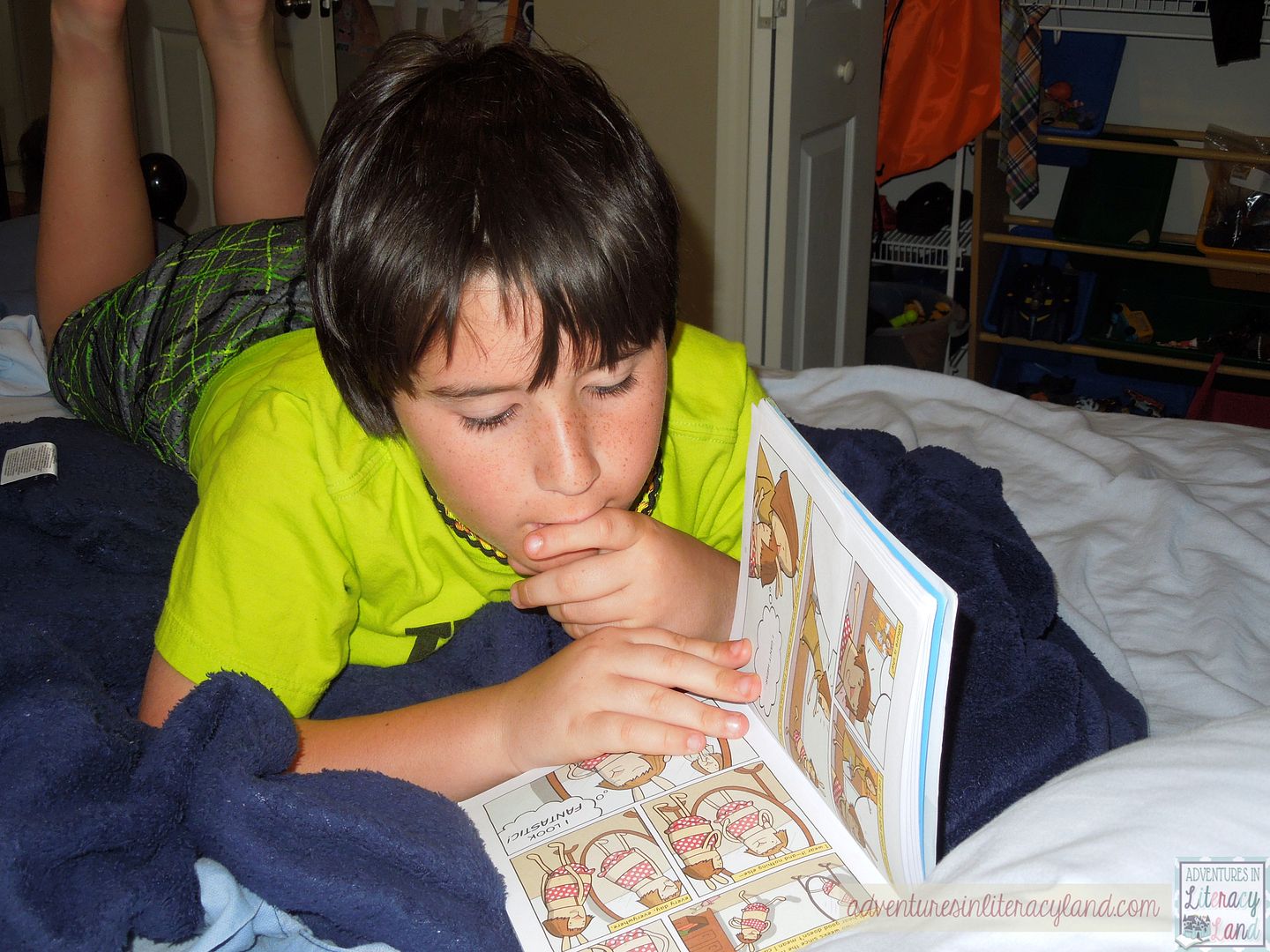
My son has to have the right place to read.  One summer he took this old box and made his reading nook.  He loved doing this and spent much of his reading time there.  He also enjoys reading in the comfort of his own bed.

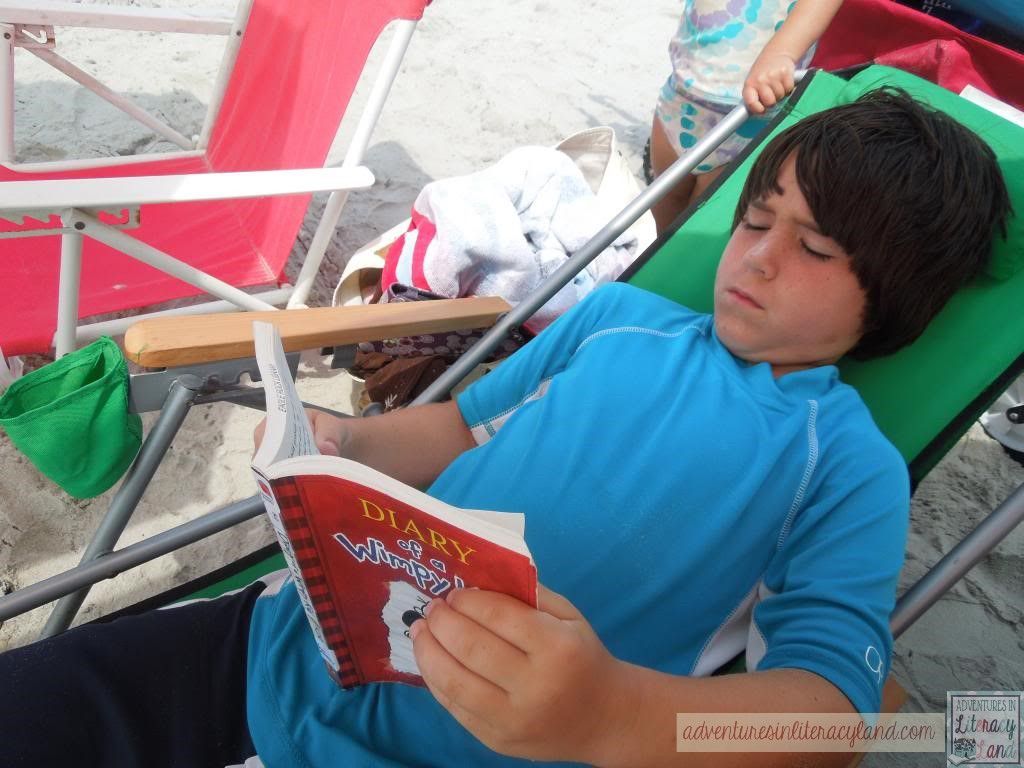
Another summer he hurt his legs at the beach and found that the beach was a perfect place to read.

The places are endless!  Go outside, stay inside, anyplace is a good place to read!

Reading socially is great for children, especially as they get older.  Now that my son can text, he and his friends can have book discussions and give recommendations.  Our next door neighbor is a middle school teacher and gives her son and my son different books to read.  After they read them, they switch and discuss.  How cool!

Another way to get kids to read socially is to form a little book club with a play date.  Children can discuss the books they have read.  Last year, Emily wrote a great post about hosting a book swap at your house or at school. This is another great way to discuss books and get new books at the same time!

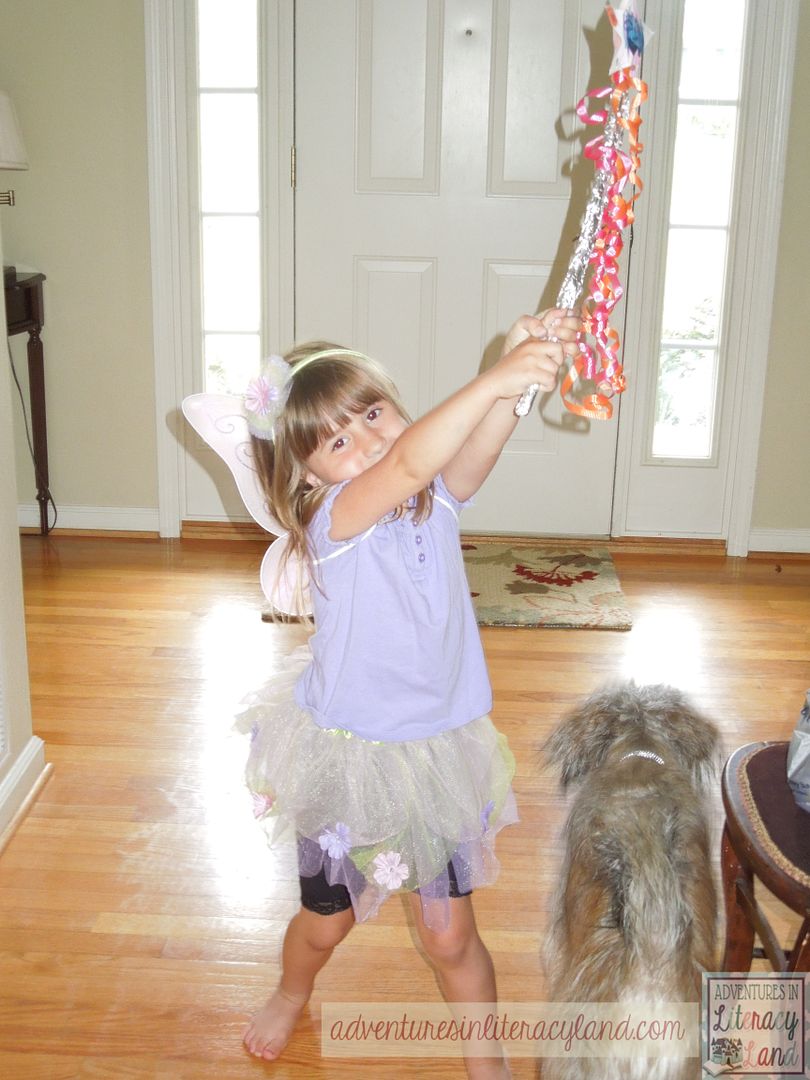
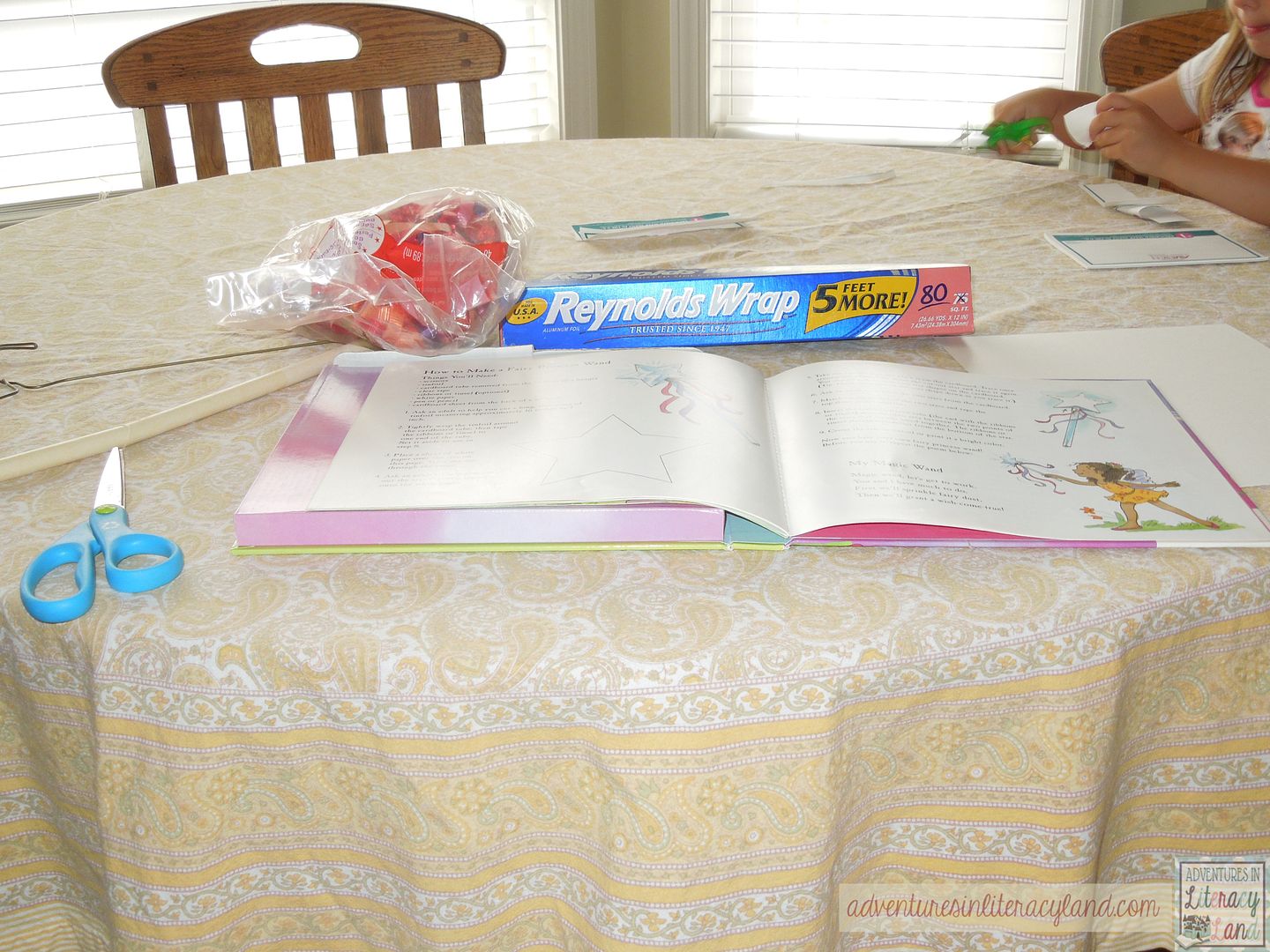
Children can read anything to be reading!  My daughter is so excited when I read directions to her, and she can help me make something.  We had so much fun making this simple wand with household items while reading directions.  It was fun, and we were able to spend time together.
 

Get books that have some summer learning experiences with them.  Go outside and learn! If your family is going camping, read about what you need to do go camping.  Does your child like Legos or Minecraft?  There are books for those too!

But, to make it fun, it can also just be fun to read and enjoy it.  No projects or essays ~ just the pure enjoyment of reading, wherever and whenever they want!  That is the best motivation!

Enjoy your summer, and don't forget to read, read, read!


HELP! I don't know what to write about!

HELP! I don't know what to write about!

The key to teaching writing is to take away the fear and the excuses.  "I don't know what to write about," is the worst excuse EVER!  If your students give you this excuse, you need to rethink your brainstorming activities for Writer's Workshop.

Three ideas

1. Topic Cards 

I am an admitted thrift store junkie.  I have some thrift stores in the area I frequent for specific things. I go to the book section first.  Can't pass up children's books for 78 cents!  I also look for word books, but that's coming later.  Then I look for "Topic Cards."  Most people know these as flashcards, but they are really topic cards in disguise.  I put the cards in a container labeled "Topics."  If students want a new topic, they can choose a card.  Easy.  Last week I found old cards for a peg board (young teachers won't know what I'm talking about).  These cards didn't have words, but it was easy enough to add the words with a permanent marker.

2. Word Cards and Word Books

Seasonal or Topic-based Word Cards can provide students with many, many topics.  These word cards can be related to your state standards or could be fun word cards, like FIRE FIGHTERS!  This word card excites boys and girls. These Word Books or Picture Dictionaries are perfect topic books.  These books contain words with clear photographs.  

3. Vocabulary and Classroom Anchor Charts

Finally, using Vocabulary Anchor Charts in the classroom can provide a wonderful topics for your students.  They could want to write a new chapter for "Dinosaurs Before Dark" or they can write their own Jack and Annie story.  They might even want to write a completely different story about dinosaurs.  

I hope these ideas will end the "I don't know what to write about" excuses.