What's in the Truck? ~ A Different Approach to Summer Reading

Hello, everyone!  It's Andrea from Reading Toward the Stars again with some more insight into summer reading through the book Summer Reading by Richard Allington.


Imagine this scene:

It's a hot July day, and kids in rural areas are outside playing and enjoying some fun with family.  This old truck comes up the road and stops right in front of their house.
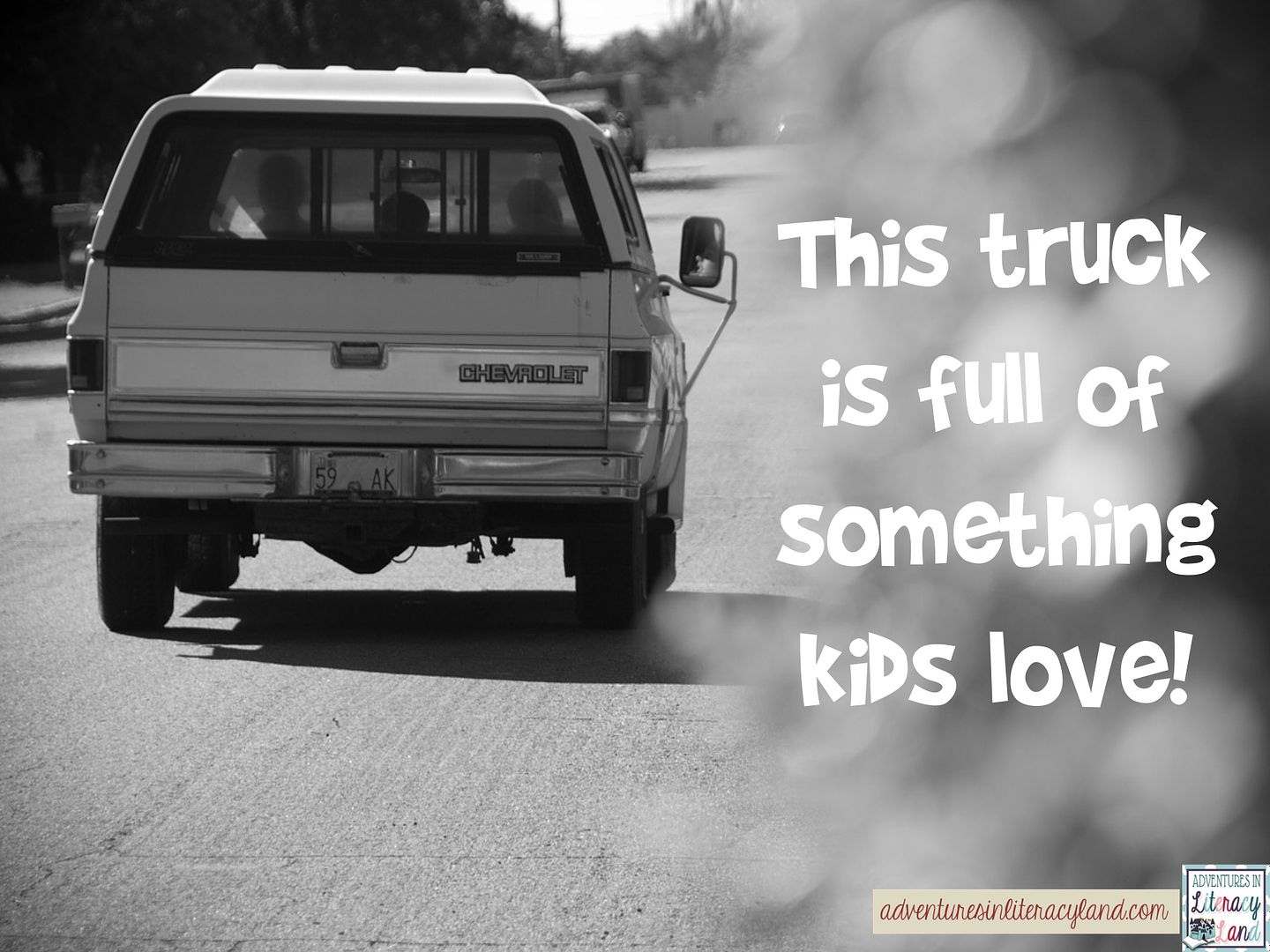
They come running to it with excitement!

The teacher gets out of the truck and begins talking to the children and adults at the house about the books they read the past week.  After the children return their books from the week before, they choose five new books they can and would like to read for the next week.

Smiles light up everyone's face during this visit!

This is exactly what one high poverty rural county in Florida has done for many summers.  Their teachers work together to ensure that students have access to appropriate reading material by driving the "bookmobile" into these rural areas.  Before the children choose new books, the teacher surveys them about what they read, liked, and didn't like.  Then the students choose 5 new books to read for the next week.

What were the findings?

1.  Students who participated full time (7-10 weeks) showed the most progress.

2.  Though it didn't increase fluency or sight word knowledge, it did affect the self-concept of each child probably because they were able to choose their own books at the appropriate level.

3.  Comprehension scores of full time participants saw gains.

4.  Though students did not achieve on grade level gains by the end of the summer, they still made gains, which eliminated the "summer slide".


Is this effective?

Yes, it is effective to some extent!  There were some gains with this model, but there needs to be more intensive interventions to make significant gains in students in poverty.

Where do we go from here?

The school that started the program has continued to have weekly book visits but have also incorporated a one-on-one tutoring intervention.  This has been extremely effective, both economically and for the students.

How might this model suit your school?

Would your colleagues share in helping you with a project like this?

Let us know what you think in the comments below.  And join us again tomorrow as we continue our book study of Summer Reading:  Closing the Rich/Poor Reading Achievement Gap by Richard Allington.



OTHER SUMMER READING BOOK STUDY POSTS:

Why I Will NOT Pick My Students' Books For Them Anymore


Summer Reading: Closing the Rich/Poor Reading Achievement Gap will provide you with ideas you can use to prevent summer slide.

Yes, I am guilty, and I bet I'm not the only one. I confess that I am a teacher who has selected books for my students' independent reading. Not as a general practice, really, but in a pinch when a child needed a book and didn't have time to pick or when he/she picked one that was too easy or too difficult to read. In fact, I've probably done it multiple times. Ironically, this was a discussion I had with a few teacher friends and our librarian at the beginning of the summer *before* I read this book. We talked about whether students should be "locked into their level" or allowed to pick freely, even when a book is beyond them. So, where would you fall in this discussion? Do you allow students to take books that are too hard, or do you limit them to books in their range, or do you give them one of each? In chapter four of Summer Reading, we learn there are reasons why we need to allow students to make book choices for themselves, but guiding their decision making is perfectly fine, especially if the child isn't aware of book levels.

Think about this quote for a minute and reflect back to your experiences as a child. Hopefully you remember how exciting it was to go to the library to pick just what you wanted to read. Perhaps you have children of your own and can relate to this quote too.  Choosing what you want to read has power, and completing those books creates pride.

Summer Reading: Closing the Rich/Poor Reading Achievement Gap will provide you with ideas you can use to prevent summer slide.

At the beginning of chapter four, Dr. Allington discusses how important it is that we as teachers learn about our students' interests and about books that match them in order to help guide students to make good choices. We can learn about our students' preferences through interest inventories, group discussions, and from watching what they choose during library visits. Talking with your students while they're reading the book also helps the teacher know whether the genre or topic is a good fit too.  


So what does the research show?  Dr. Allington shared a study of 300 Black students in a urban school with a high percentage of low income students. The students were allowed to "shop" for books at a book fair that they were allowed to take home for summer reading (and keep).  Each was allowed to pick fifteen books, and during the "shopping" experiene, the student conversations were recorded. The students were very excited, and interestingly, the most popular titles selected by the students were about pop artists, cartoon superheroes, about places they were familiar with, the Captain Underpants series, and believe it or not, nonfiction which is atypical from other studies. They chose books that "reflected media and mass marketing interests". 

Once the students had made their selections, they were interviewed about how choices were made. In the interviews, one young lady shared that she thought Hilary Duff was "cool and liked how she dressed."  She shared the reason she chose the book was that she wanted to learn more about her. Superheroes were also popular because a few had seen movies about Incredible Hulk and Spiderman, so they picked Captain Underpants and How to Draw Spiderman. Luckily, teachers will be glad to know that some students shared that they chose based on read alouds their teachers had read to them or books they'd talked about in class, books the teacher recommended, or because a friend or relative had read the title.


So how have you established a reading culture in your classroom?  Please share your teacher tested ideas for others to consider, and be sure to return tomorrow for chapter five.  Andrea will talk to you about "Taking to the Streets!"  Sounds like a chapter you won't want to miss!

OTHER SUMMER READING BOOK STUDY POSTS:

Preventing Summer Reading Loss: What Really Works?


Hello Royal Readers! This week we are discussing the book Summer Reading by Richard Allington and Anne Mc-Gill-Frazen. Yesterday Andrea shared the what the research says about summer reading and economically disadvantaged children. You can read that post {here}. Today, we'll focus on chapter three.

What Have We Learned about Addressing Summer Reading Loss?


This chapter takes an in-depth look at summer reading programs and the potential they demonstrated in addressing summer reading loss. Each summer program was conducted as a study with a treatment group and a control group.

In the first study, students from high poverty elementary schools were invited to attend spring book fairs.

The project targeted books that students could read at their independent level (99% accuracy with phrasing and expression).

Additionally, the books fit into four broad categories: popular series, popular culture, culturally relevant, and curriculum relevant.

Children were given free rein to select the books they wanted to read during the summer.

Overall this program demonstrated that providing self-selected summer reading materials improves reading achievement.


Another study was conducted with summer school students.  One group of the students participated in a summer reading club for 30-60 minutes of the day while others did not.

The reading club participants gained more in reading levels, reading accuracy, and fluency than their counterparts.


In yet another study, books were mailed out to students weekly over the summer. Prior to the start of summer, one group of students participated lessons at school that modeled oral reading and comprehension strategies.

Results of the study showed that students in this group scored significantly higher than the control groups.

What Does It Mean?

The findings of these studies suggest that voluntary summer reading may help close the rich/poor reading achievement gap. By increasing the amount of voluntary reading children did over the summer months summer reading loss was eliminated and growth was made.


Discussion Question

How could information presented in this chapter be used to improve the summer reading program at your school?  Share your thoughts in the comment section below.  

Stop back each day this week for additional information on Summer Reading: Closing the Rich/Poor Reading Achievement Gap.

OTHER SUMMER READING BOOK STUDY POSTS:

Summer Reading ~ What the Research Says


Happy summer, everyone!  It's Andrea from Reading Toward the Stars!  Even though my summer is coming to a close, I am still enjoying every moment I can of it.

Yesterday, Carla shared reasons that children in poverty suffer more from reading loss over the summer from the book Summer Reading by Richard Allington.  You can read that post by clicking {here}.

Today I will focus on chapter 2, which shares research findings for interventions that brought some help with summer slide to students in poverty.

After using rigorous methods to find research that had already been conducted, they came up with these 8 categories for the outcomes.

1.  attitudes toward reading
2.  motivation to read
3.  reading behavior
4.  basic language skills
5.  emergent literacy skills
6.  reading performance
7.  writing performance
8.  general academic performance


The bottom line

So...


From all of the many research the authors dug through, they used the most rigorous ones to show their data.  They found what we all probably already know:

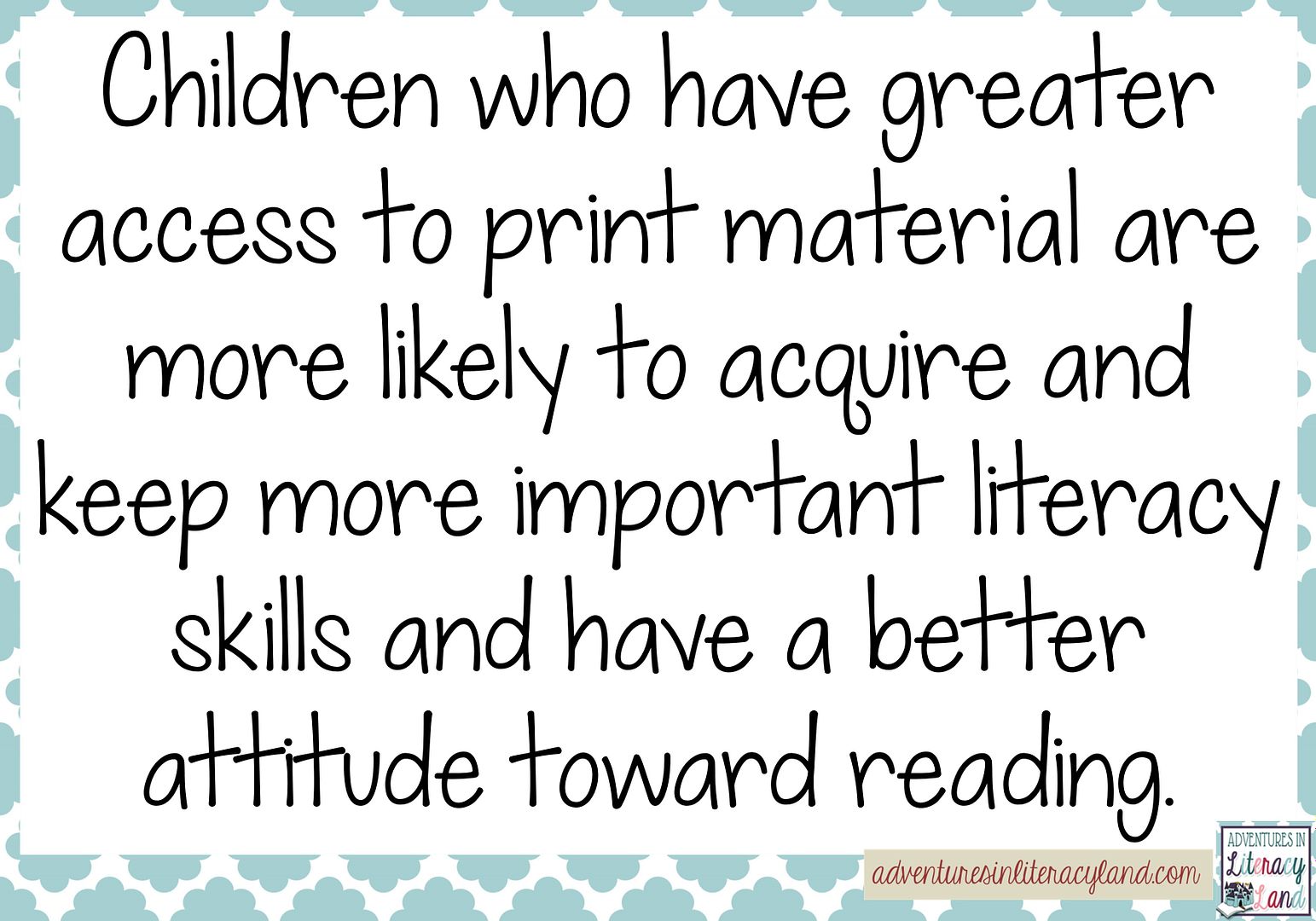
"Providing books and magazines to children - either by lending the materials to them or by giving them the materials to keep - improves their attitudes toward reading, the amount of reading that they do, their acquisition of basic literacy skills, and their reading performance."  (Allington, 2013)  

In the next few posts, find out how different studies in different schools worked for their communities and how the children fared with their summer reading.  I love some of the ideas and how the interventions worked for these communities, so you won't want to miss them!

How has your school handled summer reading?  

What are some things you can do to help prevent summer slide?

And don't forget to come back tomorrow and the rest of the week to read more!


OTHER SUMMER READING BOOK STUDY POSTS: