Hello, everyone! It's Andrea from Reading Toward the Stars here with some writing help for young readers.
As I work with students throughout the day, I am constantly working to make sure they are getting every aspect of literacy instruction to help them get the full picture of all things literacy.
One easy way to help young readers learn to write is through models. This may seem simple, but it is such a perfect way to introduce them to the conventions of writing.
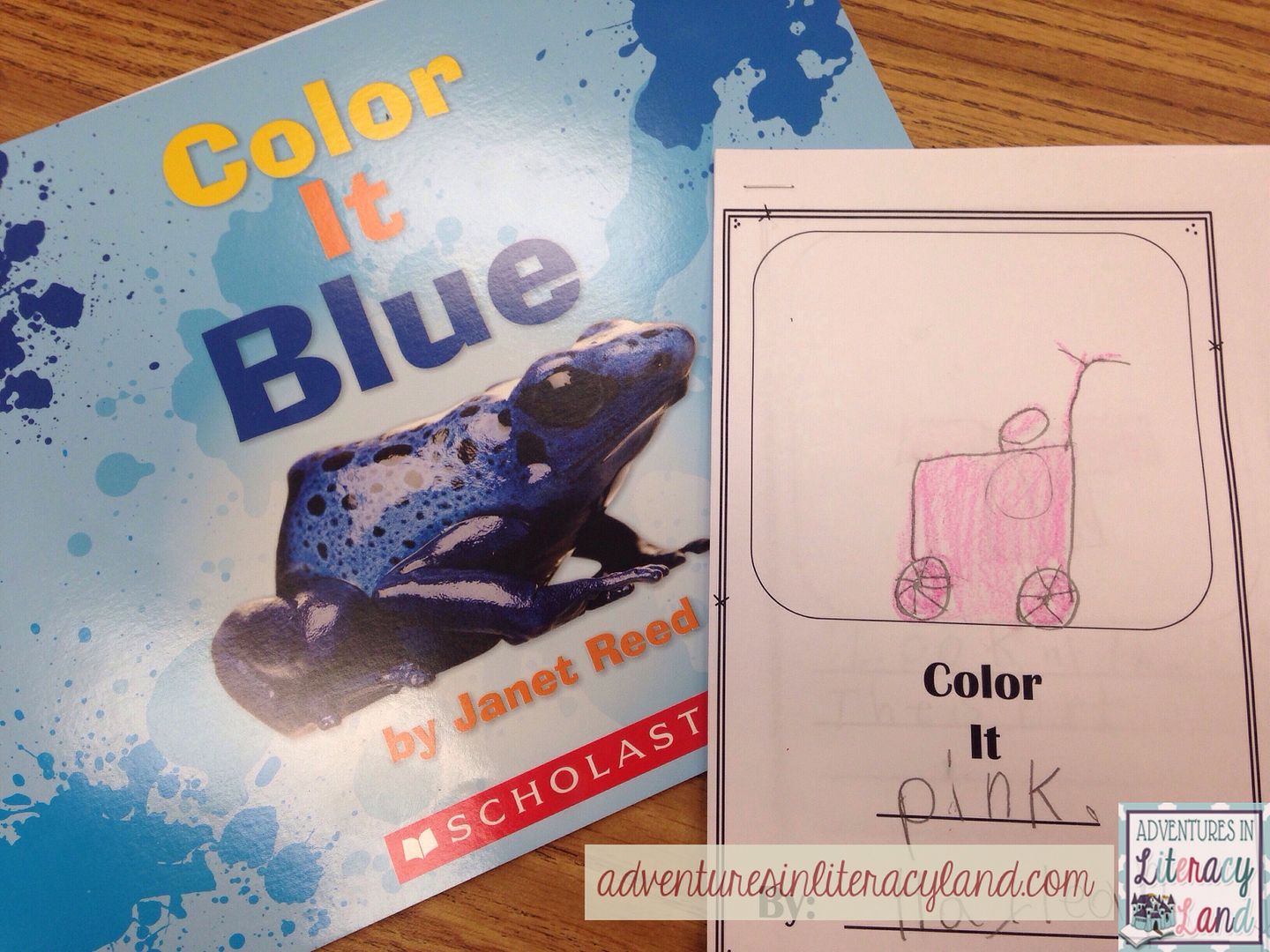
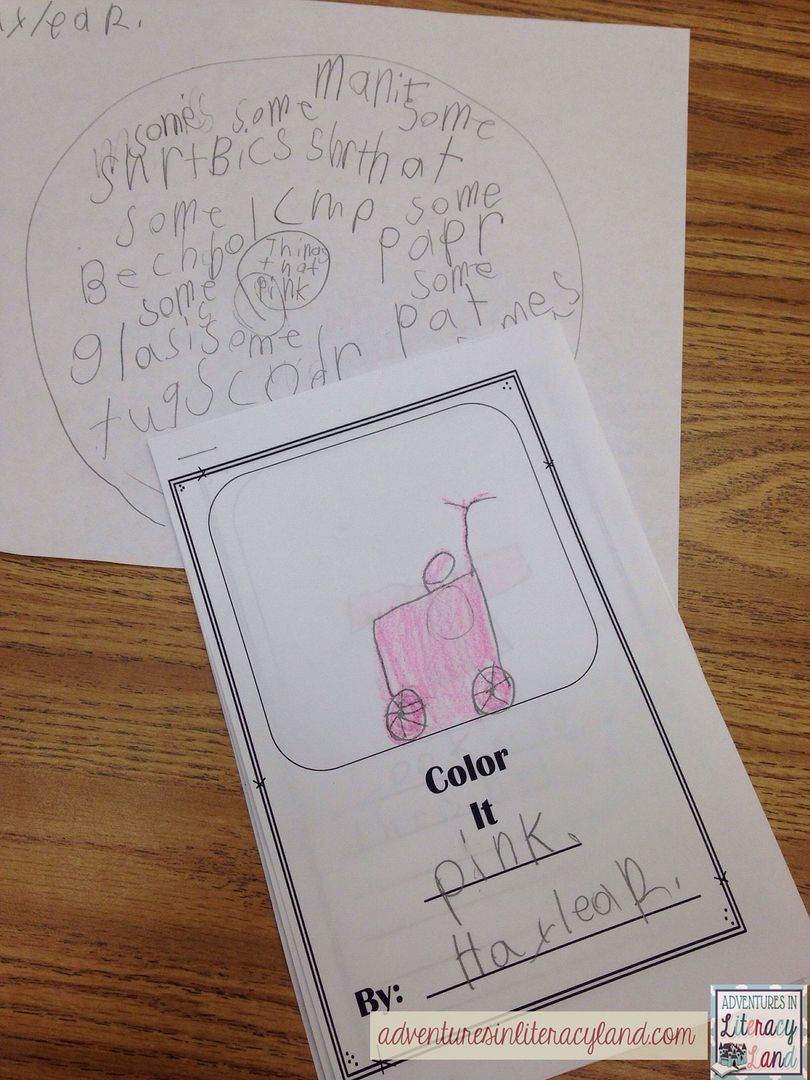
I read a simple book with the students called Color It Blue from Scholastic. After reading it, we made these books with other colors.
The students first made a Circle Map to list some things that were the color they chose.
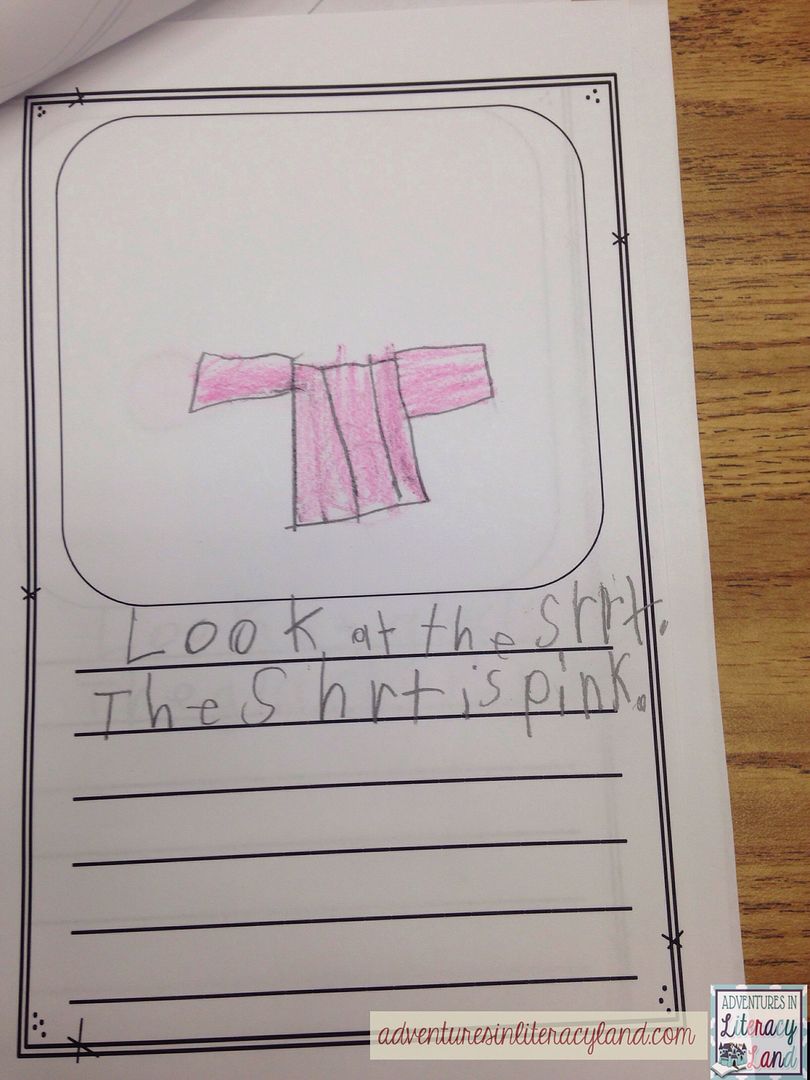
Then they used the book as a model to help them write and illustrate their very own books.
I love using this to help students understand the conventions of writing. It is a simple way to help them gain insights into the conventions of writing with sentences and words.
5 Tips that will help you LOVE your Listening Center
Do you have these problems with setting up and running a Listening Center?
You don't have enough books.
It's too noisy.
You don't have the "fancy smancy" listening center that costs hundreds of dollars.
The kids fight over who is running the Listening Center.
Here are a few ideas that may help you have a more organized Listening Center.
Have teachers put their resources together. Share your listening center books. Our first grade team has done this. We have a common area where we keep our books. Luckily, we had a great parent helper organize our books for us.
She was WAY organized and would seriously come all afternoon almost every day last school year. Honestly, it was like having a personal assistant at school. We miss her!
Anyway, here is what she came up with.
They are put in order first by "theme" that goes through the entire school year. Then, the rest are in alphabetical order. When we check out a set of books, we put the clothespin with our name on the books that we are using. This way, others can see where the books are at and I know quickly where I need to return them.
For years, I had students listen to books without any headphones. My listening center is in the hallway right outside the door so they could listen directly from the CD player. Here's the problem: They were always talking and goofing around.
I got a headphone jack this year. I thought it was going to be expensive, but it really wasn't- I got one that has 10 headphone jacks. I had ordered it out of a school supply magazine for about $25.
Here is one from Amazon that only has four.
Have you ever looked at the prices of a "fancy smancy" listening center? Ridiculous! I use a Boom Box (yes, I just said Boom Box). It does the job. It has both a CD player and a tape player in it. I think I got mine at Wal-mart about 10 years ago and it still works!
I have "leaders" at the listening center. I put a list of the center groups at the listening center (laminated) and then I just put a black dot next to the name of the person who is the leader that day. I just go down the list each time I put a new book into the listening center. We practice "A LOT" how to be a leader. They are in charge of getting the books and handing them out, putting in the disc, and they are the ONLY ones who are touching the CD player.
I mentioned above that I didn't use headphones for years. I do now. It is SOOO much better. Each student has their own set of headphones. We keep them at their "bookshelf" that is next to their table groups where we keep a lot of the supplies. When they go to the listening center, they grab their headphones. It is now QUIET at the listening center.
Top 10 Literacy Tips for Teens
If you have lived with a teen recently or are beginning your career in middle or high school, then chances are these kids look familiar to you. Perhaps you've noticed that teens are very tech savvy often listening to music while they're working on a paper for English, sending messages to friends through Snapchat, and checking the latest game scores on ESPN. Yes, our teens are multi-taskers to the extreme, and if you are teaching them, then chances are you've become pretty tech savvy yourself and observed these and many other teen behaviors.
Parent Reading Volunteers
It's Jen from An Adventure in Literacy here to share an easy, no
hassle way to incorporate parent reading volunteers in your classroom.
Last year in my class I had "Read with Me"
volunteers. These volunteers would come weekly on scheduled days/times to
listen to students read. Once I set up the initial schedule the program ran
flawlessly for the rest of the year. The parents and students loved the program
and it took very little work on my end. Here are some tips to incorporate this
in your classroom.
1. Enlist Volunteers
At back to school night I shared this program and put up a
sign-up sheet for interested parents to sign up. I listed times that I knew
would be ok for students to be out of the classroom for a few minutes (literacy centers
and intervention time). I also put a blurb about this in my newsletter for
parents that didn't attend back to school night.
You can download a no frills editable copy here.
2. Make a Schedule
After signups I made a schedule and contacted parents.
3. Train Volunteers
Many classrooms in our school were using parent reading volunteers so our reading
specialist had a brief training for volunteers that shared tips for reading
with children and helpful prompts to use.
4. Set up a Routine
I put the reading log sheets and a pen on a clipboard hung
by my door. When volunteers arrived they took the clipboard, grabbed two chairs
to put in the hall, and selected the first reader. After the first reader
finished they told them who to send out next. Students brought their
independent book boxes with them so they had familiar books to read. The
students and parents knew what to do so it minimized distractions and I could
continue teaching.
5. Be Flexible
I let the volunteers decide how they wanted to run their
session with the child. Some would read a few books while others would focus on
just one but have discussions after. Each volunteer seemed to add their own
spin which was great because my students were getting different opportunities
to work on different skills. I also let the volunteers know that if something
came up and they were unable to attend it was not a big deal.
The read with me program was a huge success in my room and I
was so amazed at how easy it was. If you're interested in starting something
similar you can download a free copy of my student book chart and directions here.
Subscribe to:
Comments (Atom)