Five Fun Ways to Practice Sight Words

Tara from Looney's Literacy here checking in to share some fun ways we're practicing sight words! 


 Sight words are an important part of literacy learning. However, there are not many strategies to teach sight words other than memorizing them. Committing information to  our long term memory requires repetition. Repetition can become monotonous. So it becomes critical to find ways to change up sight word learning besides the same old flashcard method.

Today I'm going to share with you five ways you can change it up a little with your sight word learners. Hopefully making sight word learning fun and effective!


Sight Word Slap

You could do this game several ways. I would say, adapt this game to fit the materials you may already have available so as not to spend a lot of extra money on supplies. You can also adapt this game to one or multiple players.

Materials:

Large paper, post-it notes, flashcards, etc.
Flyswatters
small container

Directions:

Write sight words on large paper, post-it notes, or just use flashcards you already have. Write the same sight words on little pieces of paper and put them in a small container. Player one will draw a card and read the sight word. Player two will then "slap" the sight word with the flyswatter. If they get it correct they get to keep the card.  Whoever has the most cards and can read them wins.

Alternative with just one or  more player(s): The adult will call out a sight word from the list and the child(ren) will "slap" the word with a flyswatter. If there's multiple children, whoever slaps the card first gets to keep it and whoever has the most cards at the end wins.


Sight Word Bracelets

Materials:

letter beads
colored beads
elastic bands
(I purchased all of this at Dollar Tree for $3)


Directions:

Give the students a list of words they are working on. I let them choose 2-3 words (unless they're small words - then you may need to do a few more). My groups consist of 2-3 students so I just lay out a handful of each of the  beads. Have the students find all the letters they need to build their words and the color beads they will need to put between words.


{Video Clip Coming Soon}

Sight Word Sentence Showdown

Materials:

Sight word sentence strips


Directions:

Type up simple sight word sentences with  a variety of punctuation marks to work on expression. Distribute sentence strips evenly. They take turns reading sentences. They usually just get a kick out of reading them in silly voices! They really don't need any other incentive to enjoy this activity!


Shaving Cream Rainbow Writing

We didn't get a chance to try this one but it is next on my list! I found this at Kids Play Box.


Sight Word Chain Links

We haven't gotten a chance to try this either but it's been added to the list as well. You can find this at Maggie's Big Home.



4 Sight Word Strategies for Emergent Readers

I believe in sight words IF they are taught carefully and consistently. Students must have a working knowledge bank of words to help when reading.
I won't drone on about the importance of sight words.  I believe even the earliest learners can be taught to recognize sight words...even before they know the letters.  I, personally, don't want them to think of the words as parts (l, o, o, k).  I need them to think of the words as a whole.

Here are 4 ideas for making sight words (word wall words) meaningful and easy for all students.

1.  Personal Word Walls

In a recent post on Virginia is for Teachers, I talked about personal word walls.  This is a great tool for students.  This personal word wall is Jamie's.  He is a struggling reader and this personal word wall is focused on just the words he has been introduced to through his guided reading lessons.

2.  Sight Word Phrases

Sight word phrases are an easy way to get students to use the words in context, not just in isolation. Having a phrase section on the word wall can help them practice the phrases as they read.  They can use them in writing and in centers.

3. Sight Word Games

Sight word games are a fun way to help the students practice their words.  The Roll-a-Word game can be played independently or as a team.  Independently students can roll the dice and color a square to build  a tower.  When they roll one word enough times to make a tower touch the top, they are done.  Adding a quick tally lesson, the class can tally which words make the tower each day.  At the end of the week, you have have a sight word winner.  If you want it to be a partner game, each student will need a different color crayon.  Each student will roll the dice and color a square with their color.  Whoever colors the square that reaches the top, will be the winner.  The Fluency Races are especially fun.  Students roll the dice and read the column as fast as they can. They have to start over if they mess up, but they think it's fun.

4. Sight Word Centers

Having a sight word component to centers makes the centers strategic, as well as independent.  Each week the Art Center and Poetry Center are the poem of the week from the week before.  The poems are familiar. They circle word wall words and color in yellow.  The ABC Center above was an activity with in/on.  The Dry Erase Center is set up with sight words and phrases.  Students can practice writing.  

CLICK HERE to get a FREEBIE set of Sight Word Activities.


Silent Reading Partners

Reluctant readers versus avid readers.  We all have them.  We work hard to keep the avid readers excited and challenged.  We work hard to get the reluctant readers excited and challenged.

How do we do this?  In so may different ways.  Engaging lessons, book choice, celebrated successes, providing books of interest, book clubs...the list goes on.  And I know as teachers, we will never stop searching for those ways to excite, engage, and challenge.

To become better at anything in life, we need practice.  To become a better reader, students need to read.  And some of our reluctant readers don't read as often because they feel that they can't or that it is too hard.  They need to feel successful and there is something to be said about reading without any judgements being made. Silent reading partners can provide this.


This past week my daughters participated in a "Tail Waggin' Tutors" program at our local library.  The energy was at all-time high in our home before and after the event.  They each picked out a book to take with them and they read to two dogs each.  Bookmarks with a picture of the dogs were in each of their hands on the way out the door.


These silent reading partners provided both excitement and challenge to my readers.  For my youngest (kinder), she walked away with a book that she wanted to try to read to me--but would have told me prior that she could not read it.  For my oldest (firstie), she walked away eager to share her experience and tell about all the jokes she shared with the dogs.

The dogs listened.  No judgements made.

Don't get me wrong...students need to have the feedback that we provide them during guided reading groups or that parents provide when reading at home.  Students need the modeling of a choral read, echo read, or repeated reading.  Students need to hear strong, engaging read alouds.  They need to read books at their instructional and independent level.

But they also need to read because they just want to read-without judgement, without feedback-without agenda.  Just read to read.

This doesn't have to occur only through a great program that comes to the library or our schools.  Maybe it is a pet in the home or a baby sibling.  The opportunities for a silent reading buddy may already be present. 

 
At the beginning of the year, my teammate lined up all the reading buddies she had bought at garage sales over the summer.  Each student in our grade got to take home a buddy to read to each night.

Some students do not have a family member to read to, or a parent that is going to encourage read aloud time each night.  The hope is that this little silent reading partner can excite and challenge our reluctant and avid readers.

As spring begins to show its face and summer is on the horizon, I begin thinking about what I have done and what more I can do to ensure that my students keep reading.  Even when I am not there to listen.


Math and Literacy Connection: Vocabulary

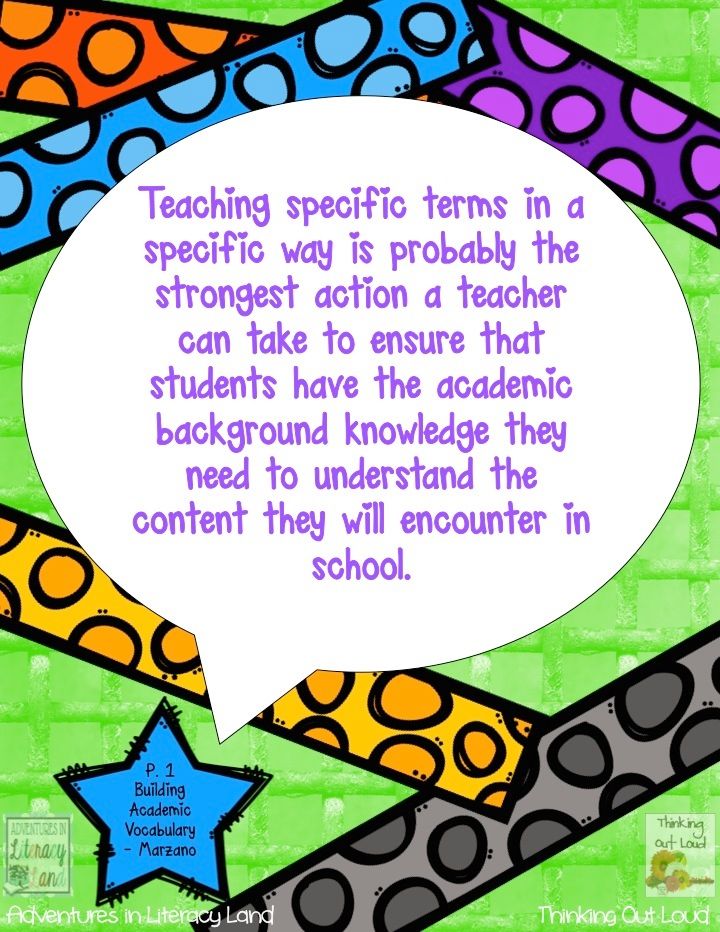
One of the big connections between math and literacy is teaching academic vocabulary.  Without understanding of key vocabulary in math, students will struggle with each concept.  Because a teacher cannot assume that students will automatically understand content vocabulary, the teacher needs to employ the vocabulary strategies used during literacy instruction to mathematics.

Mathematical literacy is dependent on vocabulary knowledge.  Many of the words have meanings in math that are different from the meanings in every day use.
  • Product
    • something that is manufactured for sale
    • number or expression resulting from the multiplication of two or more numbers or expressions
  • Mean
    • deliberately unkind
    • a number equal to the sum of a set of numbers divided by how many numbers are in the set (average)
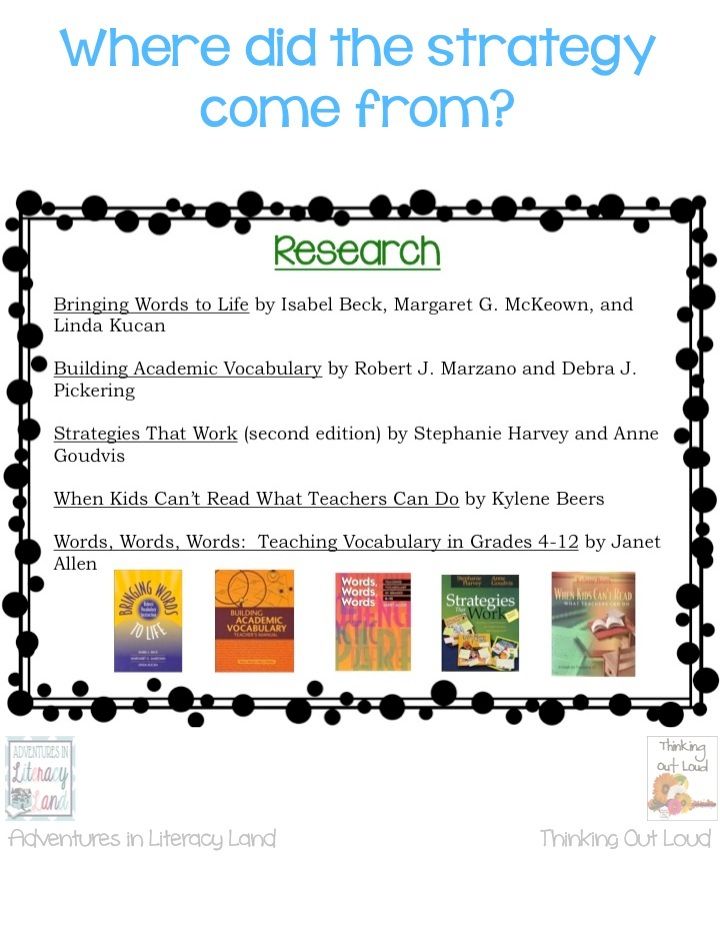
Knowing a word is more than just knowing the definition, which means that looking up definitions in the dictionary/glossary is not an effective way to help students create a firm foundation.  A fellow instructional coach and I created an interactive vocabulary strategy to help our students.  We used this strategy in grades PK-12 in all subjects.

The strategy has five steps that are easy to follow and help you create a plan to teach vocabulary more explicitly.


  • Choose the Words
    • The goal of this step is to choose 3 words per topic that are the most important to understanding the concepts being taught.  They are "umbrella" words that other vocabulary would fall under during the study of that topic.
  • Introduce the Words
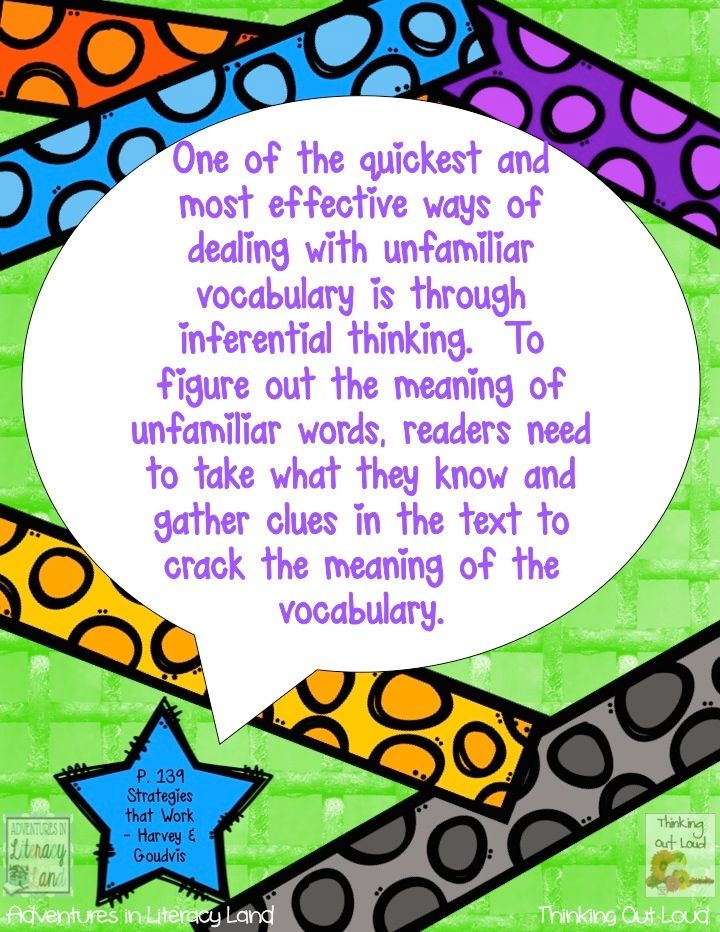
    • Introduce the words without directly telling students the definitions of the words.  Give clues about the words using images and objects associated with the word.
    • Have students infer the meaning of the word and write a description.  This description is a starting place for their understanding of the word and the description will be modified as they learn more.
  • Infer Meaning using Context Clues
    • Read aloud a passage that has the vocabulary words in context (from a novel, textbook, article, teacher-created paragraph, etc.)
    • Create a class chart with three columns:  word, text clues, inferred meaning.
  • Create a Graphic Representation
    • Model creating a graphic representation (see FREEBIE below for template for this step) of one of the words making sure to think out loud for students about why the graphic was chosen.
    • This is a great step for students to do in groups.
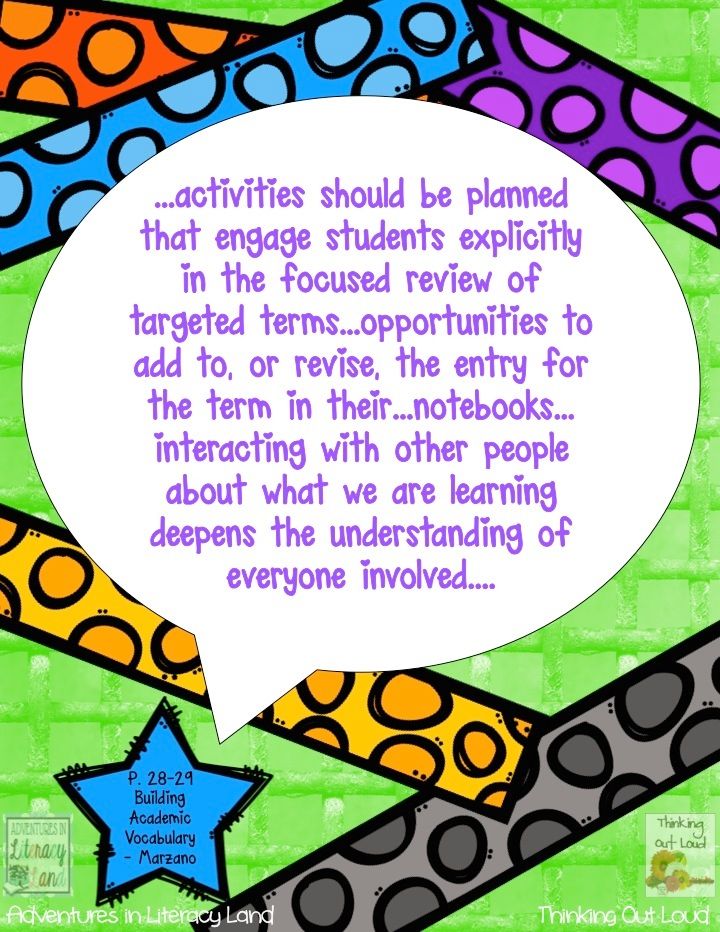
  •   Interact with the Words
    • After being explicitly taught the vocabulary with the above steps, students will begin to interact with the words in a variety of ways:  graphic organizers, games, word association activities, etc. (see FREEBIE for ideas on how to do this)
One last thought (and a freebie) before you go:


CLICK HERE to download this strategy and CLICK HERE to download an example way to interact with the words - Word Association.

What do students think about this strategy?  Here are some direct quotes from eighth grade students:
  • "I think vocabulary strategies this year are a lot stronger than ones last year.  Now I can understand what words mean without struggling to memorize a definition from a dictionary.  Also, things are easier to sink in now."
  • "I love doing the skits and pictures, and I also love Pictionary and the clues.  Last year I didn't like learning vocabulary so much, but this year it's easier to learn the words when we're having fun."
  • "I love doing vocabulary this way instead of just looking up the definition the old way where you just copy out of a glossary.  It was much easier to learn this way."
If you missed the first post in the Math and Literacy Connection Series, go back to read about why the connection is important and learn about another vocabulary strategy - Word Splash.

Next month I will continue the series with poetry...math and poetry make a fantastic connection.

Math and Literacy Connection Series at Adventures in Literacy Land


 photo thinkingoutloudtitle.png