Summer Reading Programs

Check out these free summer reading programs from local retailers to keep your students engaged with books all summer long!
Each spring, I usually post the summer reading programs offered by local retailers on my blog (Literacy Spark).  I decided to share them over here for Adventures in Literacy Land readers this time.  I like to print the actual calendars for students and put them in a folder that I give them on the last day of school with their report card and other things.

First, make sure to check with your local public libraries and see what programs they will be offering for kids throughout the summer.  Often, the librarians will be willing to come into the school and speak to students before summer starts. Many libraries hold summer reading challenges as well as special events and story times.
Check out these free summer reading programs from local retailers to keep your students engaged with books all summer long!
Check out these free summer reading programs from local retailers to keep your students engaged with books all summer long!Check out these free summer reading programs from local retailers to keep your students engaged with books all summer long!
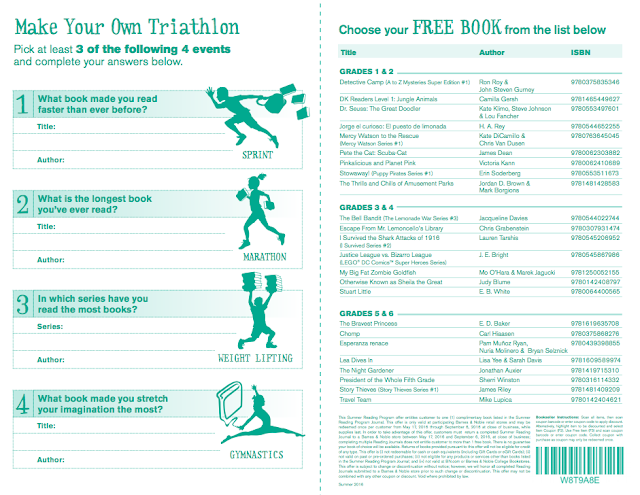
Barnes and Noble is having its usual summer reading program which rewards students with a free book upon completion of a simple reading journal.  Stores will be holding opening ceremony events on June 4th.  Find more information here.
Check out these free summer reading programs from local retailers to keep your students engaged with books all summer long!

Check out these free summer reading programs from local retailers to keep your students engaged with books all summer long!
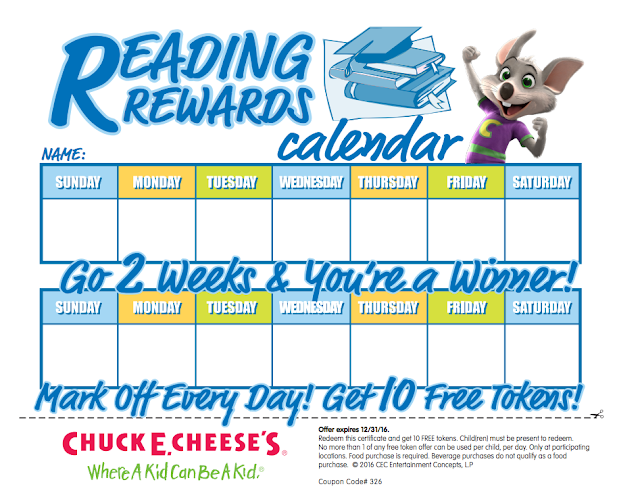
Chuck E. Cheese has a bunch of reward calendars on its website available for use any time of the year.  One of them is for reading.  Kids can bring in a completed reading calendar and get ten free tokens.  Calendars are available here.

Check out these free summer reading programs from local retailers to keep your students engaged with books all summer long!Check out these free summer reading programs from local retailers to keep your students engaged with books all summer long!
Half Price books is offering a $5 gift card with the completion of a reading calendar for the months of June and/or July.  The calendar can be found here.
Check out these free summer reading programs from local retailers to keep your students engaged with books all summer long!
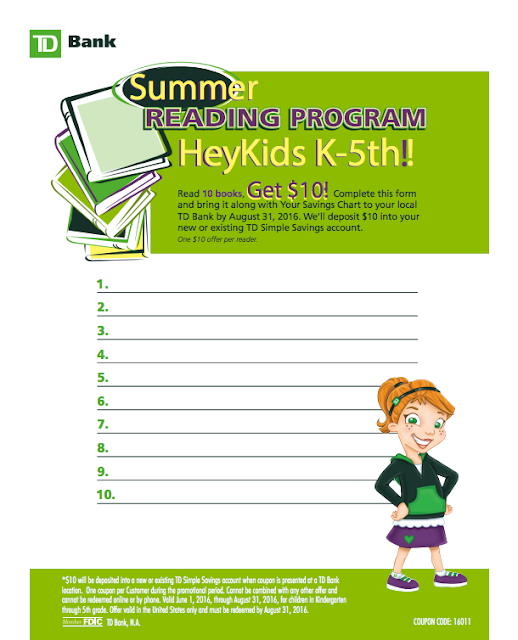
Kids that read ten books can get $10 added to their TD Bank account. More information can be found here.
Check out these free summer reading programs from local retailers to keep your students engaged with books all summer long!
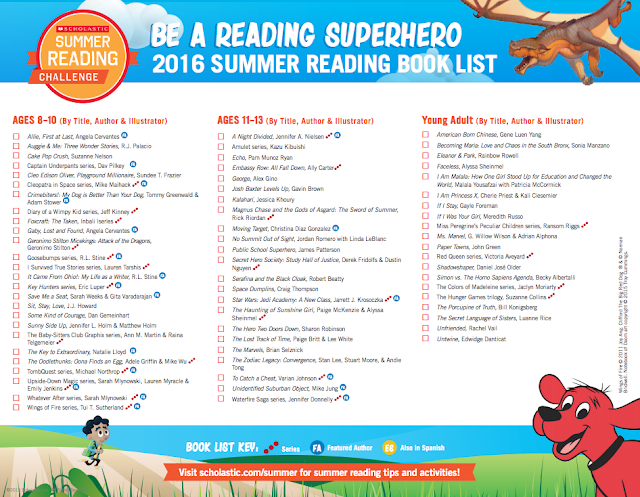
Scholastic is also hosting its summer reading challenge.  Schools, teachers, and/or parents can sign their children up to record the number of minutes read over the summer.  There are a lot of resources on the site that are great including rewards and things of that nature, but my favorite are the book lists by ages.  These would be great to send home with your students.  They can be really helpful for parents who aren't sure what their kids should be reading. The resources from Scholastic can be found here.

Sadly, I feel like I find fewer and fewer programs each year!  So if you know of any others, please leave a comment and I'd be happy to add them to this list.
Check out these free summer reading programs from local retailers to keep your students engaged with books all summer long!


The Research Paper Made Simple

Even young children can write simple research papers with an easy mentor text and model for writing.
Even our youngest students can write  simple research paper by using a fun and easy mentor text. The Important Book helps students write a simple research paper after doing some quick research.

When I help students write their first research paper, I love to use The Important Book  by Margaret Wise Brown. If you haven't seen this book, you really need to check it out! It has a simple way of telling about something that makes it easy for students to learn more about something and provides a great mentor text for helping students write in an easy way.
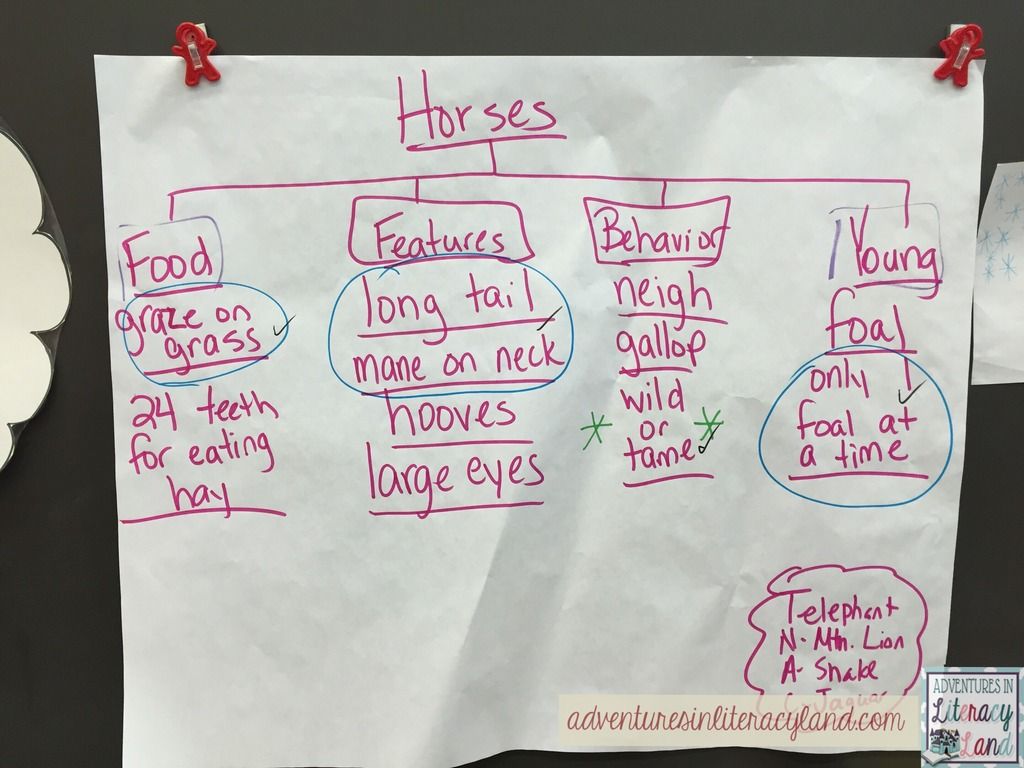
After reading the book aloud to them, I started out by modeling what I wanted them to research. I used a Tree Map to show them the information I found about horses. This also served as the information I wanted them to search for their research. I put a star next to the "important" fact and circled the other information I wanted to include.
Even our youngest students can write simple research paper by using a fun and easy mentor text. The Important Book helps students write a simple research paper after doing some quick research.

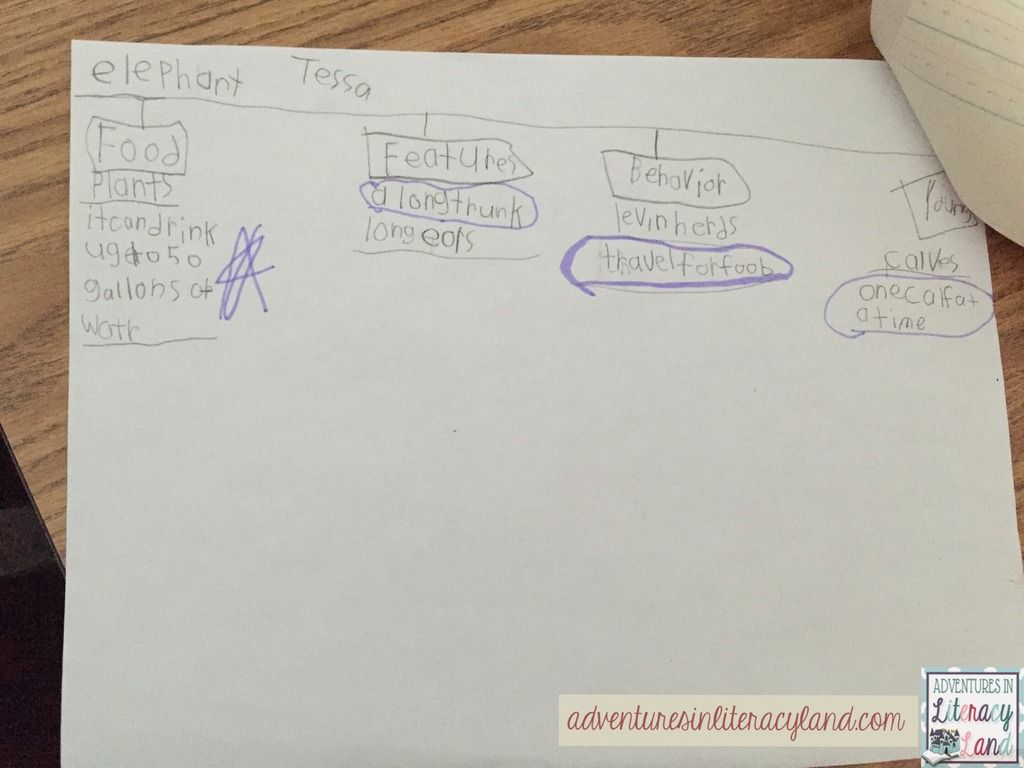
After I created my Tree Map, they chose their animals to research and researched to create their Tree Maps.

Even our youngest students can write simple research paper by using a fun and easy mentor text. The Important Book helps students write a simple research paper after doing some quick research.
They chose their important thing with a star and the others were circled.

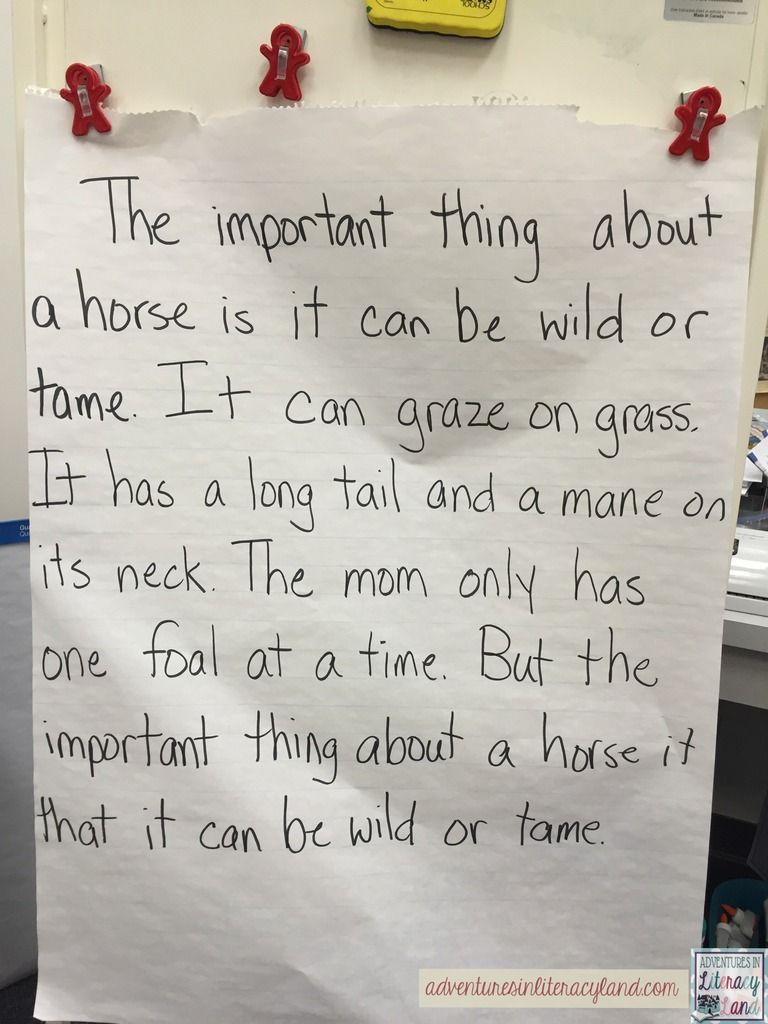
Then I wrote my paragraph using the information and creating a model for them to use.
Even our youngest students can write simple research paper by using a fun and easy mentor text. The Important Book helps students write a simple research paper after doing some quick research.

They used my model to write a rough draft to edit and revise. Their final copy was complete with a picture at the top.
Even our youngest students can write simple research paper by using a fun and easy mentor text. The Important Book helps students write a simple research paper after doing some quick research.

Overall, these second graders learned a lot about some simple research to get them ready for third grade. They really enjoyed working on this and took great pride in it ~ something they all need!

Pin for later:
Even our youngest students can write simple research paper by using a fun and easy mentor text. The Important Book helps students write a simple research paper after doing some quick research.


May The Force Awaken Reading

The Star Wars bug hit our house this past year.  My husband finally felt that my girls were ready for all the Star Wars movies...and they were hooked. This led to also reading ALL the Star Wars books that they could get their hands on.  And through this, I learned that there is quite a variety of books that are available to all our different readers, learners, and Star Wars enthusiasts.


So in honor of "May the 4th (force),"  I am highlighting some of the Star Wars books that are currently out there.  It may not be an interest of mine, but as teachers, we always need to be on the lookout for books that are going to "hook" our readers in.  Especially the readers that are awfully hard to "hook."  Some of these books (or ones like them) may just do the trick.

Fiction stories...There is a wide array of book available that tell the different stories within the Star Wars movies.  These range from leveled books, bedtime story books, to chapter books.  Some books are illustrated, while others have photographs of scenes from the movies.


Jeffrey Brown has also put out some Star Wars books that explore a new side to Darth Vader...fatherhood.  They are humorous books that examine what Vader's household may have been like when Luke and Leia were younger. You will want to pre-read these books to ensure that the humor matches the age of your students.


Some graphic novels called "Star Wars Jedi Academy" were also written by Jeffrey Brown. The story is about a boy, Roan, that is rejected from pilot school and finds himself headed to middle school at a Jedi Academy.  Woven throughout the books are journal entries, notes, letters, emails, and much more.  These additions make it so much more than a graphic novel.


Nonfiction texts...It is really interesting that Star Wars is a fictional set of stories but there are so many books available that are written in a nonfiction style.  One example is the Character Encyclopedia.  It is a large book that is chuck full of information about the different characters within the movies.  Captions, labels, diagrams, photographs, and biographical information are all included.


There are also books that focus on the technical side of Star Wars.  Some of these books are thinner, with less challenging words for our younger readers.  They may include diagrams of the different ships, details about items sold in shops, or facts that compare and contrast lightsabers.


Although Star Wars books are not my first choice of reading material, they may just be a hot-ticket item for some of the students in my class.  And I know that many of us will do just about anything to reel our reluctant readers into this wonderful world of reading! 


Theme with Text Cousins

Each year poses its own unique set of challenges, changes, and surprises.  This is one of the reasons I love teaching so much!  We get the opportunity to try again, change, and grow with each new year.
Last year I had the amazing opportunity to invite Tanny McGregor, author of Comprehension Connections, into my first grade classroom to model a lesson on theme. As we planned for this current year, my teammate and I were excited to add this lesson into our curriculum calendar.  And I wrote about what we planned to do for the Growing Readers and Writers Blog Hop. But...as we all know too well...planning and actually teaching are two very different things.

One great way to use mentor texts is for comparison. Check out this post to see how "text cousins" can demonstrate theme.

Our goal was to teach our first graders how to uncover the theme across several texts.  We have devoted a lot of time this year to deep thinking, so we hoped that this would build off what they could already do.  We would use three texts each day throughout the week.  This would provide them with multiple opportunities for practice with theme or author's message.

We started off the week with the introduction of the word theme and a discussion about all the other words that can sometimes be used for the same concept: author's message, central message, main point, main idea, author's point, etc.  Then we dug right into what our students already knew.  And what they discovered is that they have been studying theme all year.

Throughout the year we read all the Otis books, Tacky books, and Tippy-Toe Chick Go.  So this is where we started: with texts that have already been read, examined, and discussed.  This proved to be a great decision because our time was not spent on the reading of the texts but on the bridging of three texts and their themes that had been previously discussed throughout the year.  We brought these three texts out again and asked our students to brainstorm what connections or possible themes that these three books have in common.

One great way to use mentor texts is for comparison. Check out this post to see how "text cousins" can demonstrate theme.

Wow!  We wrote down all their ideas.  This was one tip that Tanny was sure to model for us.  There does not have to be one correct theme but possible theme ideas.  And she was right!  They came up with some great ideas.

One great way to use mentor texts is for comparison. Check out this post to see how "text cousins" can demonstrate theme.

And so our lesson continued each day with three different texts: a poem, pictures from a story, and a book.

They used those three different texts to come up with possible common themes.

WOW!  What we found was that the lesson proved to have the right amount of challenge for them. At times they wanted to revert back to surface level.

For example, we used the texts This Way, Ruby, a poem The Secret Song, and Sidewalk Flowers.  One of our classes wanted to point out that there was a bird in all three texts or that there were flowers in all three.  These were connections that but they were not digging deeper into the theme or message of the text.

At the end of the week, my teammate took one of the themes for each set of text cousins and had it framed.  She explained that the theme or message is so important and special that it needs to be framed.  I LOVE this idea because it is another visual for our first graders to understand the importance of deep thinking when reading.

One great way to use mentor texts is for comparison. Check out this post to see how "text cousins" can demonstrate theme.One great way to use mentor texts is for comparison. Check out this post to see how "text cousins" can demonstrate theme.


I look forward to using these lesson again next year and seeing where it takes us.  What texts would you use to do this teach theme?