Learn Like a PIRATE: A Must-Read!


Last summer I was immersed in Dave Burgess'  Teach Like a PIRATE. What a refreshing and motivational read!  This is one book that sticks with you, and the innovative ideas linger in your mind, are just best practice, and involve risk-taking from the both the teacher and the students.  So, I was beyond thrilled when I saw that Learn Like a PIRATE had been published and knew that it would be at the top of my summer professional reading!  This easy to read, thought-provoking book written by teacher Paul Solarz, takes the pirate analogy and acronym to the next level: that of our students. 

More specifically, Solarz's focus of the book is student empowerment through the creation of a student-led classroom.  How can our students learn like a PIRATE?  Solarz uses the PIRATE acronym to emphasize strategies for an active and engaged classroom.


Paul Solarz's infectious enthusiasm for teaching is invigorating and just what a weary teacher needs to regroup after a long school year. If you are looking for new and innovative teaching strategies to re-energize your teaching and your classroom, then this book is for you!  Written in an easy to read format, the book is entertaining, practical, and grows you as an educator as Solarz shares teaching techniques and strategies that you can implement to transform your students into collaborative, risk-taking, and creative pirates!


Throughout the majority of the book, the author discusses each component of the PIRATE acronym in depth.  He offers the research and his own experiences of how to structure, implement, and maintain a PIRATE classroom.  Topics include: teacher evaluations, classroom management, discipline, grades, literature circles, twenty-first century skills, and so much more!  Sprinkled throughout the book are QR codes which link to graphics and to websites such as the author's own personal classroom blog for even more ideas and authentic examples of how to implement the theory into practice.


This must-read will appeal to teachers of all grade levels. The PIRATE activities and strategies have to be modified depending on the age of your students, but many of the suggestions in the book can be implemented into a K-2 classroom!  In fact, my own personal goal as I read and reflect on Learn Like a PIRATE is to take the strategies and look for ways that they will work in a primary classroom.  As a literacy coach and reading specialist, I may not be able to apply all of the strategies into an intervention setting, but I am excited to share these ideas with classroom teachers!

On my own blog, I have just started to write about my reflections from my reading.  Join me on Sundays, as I present the important "nuggets" from my reading and my thinking of ways to adapt these strategies into a primary classroom.  You can read the first post here and the latest post here.


If you have read the book or are in the middle of reading it, I would love for you to share your ideas of how to create a student-led classroom!



Move! Groove! Read!

Greetings Royal Readers!


It's Jennifer here from Stories and Songs in Second to share some ideas on how to incorporate literacy learning into outdoor activities during the summer!


While my current summer days are slow-paced and slightly sedentary,  I often find myself thinking back to my childhood summers when hours were spent outdoors riding bikes, roller skating, playing Kick the Can, jumping rope, and running through the sprinkler.  Chasing after the music of the ice cream truck was the highlight of our afternoons, and running in pursuit of lightning bugs was the highlight of our evenings.


I also remember the alliterative, rhymed poems my friends and I used to call out while we jumped rope or hopped over our Skip-Its.  I remember the rhythm sticks we tapped together at Girl Scout camp while we sang songs around the bonfire or marched along the trail.  

Raise your hand if you remember twirling your jump rope as you chanted....

Strawberry shortcake!
Huckleberry Finn!
When I call your birthday,
please jump in!

Smile if you criss-crossed, hand-clapped, and knee-slapped with a partner to.....

Miss Mary Mack-Mack-Mack!
All dressed in black-black-black!
She jumped so high-high-high!
She reached the sky-sky-sky!
She never came back-back-back!
'Til the 4th of July-ly-ly!

Nod knowingly if you drove your day camp bus driver crazy with countless renditions of.....

John Jacob Jingleheimer Schmidt!
That's my name too!
Whenever I go out!
People always shout!
There goes John Jacob Jingleheimer Schmidt!


Sigh happily if you remember reading Bruce Degen's Jamberry  over, and over, and over to your toddler--like I did.  It was one of my daughter's favorite books.  I read it aloud to her so many times that I know it by heart.  We used to do a simple "patty cake"-like clap to set the beat or cadence....


One berry
Two berry
Pick me a blueberry

Hatberry
Shoeberry
In my canoeberry

Under the bridge
And over the dam
Looking for berries
Berries for jam

In her book entitled, Worksheets Don't Grow Dendrites, Marcia L. Tate recommends incorporating physical movement activities, along with chants like these and a variety of alphabet books, in lessons designed to reinforce initial consonant sounds and familiar rhyming patterns. She cites research by Marzano (2007), saying that physical movement increases student energy, and therefore enhances their engagement.  She reminds us that according to Markowitz and Jensen (2007), movement also triggers memory.


She recommends having students jump rope while reciting verses from  A, My Name is Alice written by Jane Bayer and illustrated by Stephen Kellogg, to reinforce initial consonant sounds and rhyming patterns. A mini-trampoline would work as well!  She suggests having students write their own original rhymes to jump along to as well.


She cites this example:

B, My name is Barbara.
And my husband's name is Bob. 
We come from Brazil.
And we sell balloons.
Barbara is a bear.
Bob is a baboon!

You can see and hear this delightful book {HERE}!

My challenge to you--if you are a parent--is to  pull out  or go buy these "old-fashioned" toys and share them with your young children.  Then read or teach the favorite chants, stories, or poems you remember--or that I've shared here--to go along with them....and  SHA-ZAM!  You have an outdoor summer literacy lesson that is more fun than work!

My challenge to you--if you are an educator--is to keep these "old-fashioned" toys handy in your classroom and invest in the books I've recommended here.  Use them often to help reach those readers who are kinesthetic and benefit from the sensory input that jumping, gesturing, twirling, and tapping provides.

Be sure to stop back this Wednesday, June 24th, for the second installment of  The Reading Crew's SUMMER BLOG PARTY.  Our topic will be phonics fun, and I hope to have an animal-themed alphabet book activity to share with you then.  I'm in the process of creating some writing templates that students can use to compose their own tongue twisters like those in A is for Alice.  

Just think what a wonderful reader's theater presentation or puppet show performance could evolve from their original compositions!  Imagine the possibilities!

Until next time, thanks so much for sharing my story!  May your summer be full of good books, good times, good stories, and good rhymes!


Book Talks on the Menu

Are you looking for a way to get your students to read more? Book Talks are a great tool to use to build enthusiasm for reading. This post includes ideas you might enjoy trying.

Pause for a moment to consider what you do to get your students reading?  Maybe you help them find books that match their interests, or perhaps you use read alouds daily to show your students new authors. Do you talk with them about what they're reading? That sure can give you a window into their thinking and interests. Well, on today's menu is the topic of book talks. Today, I'd like to share with you some simple ways you can make this time purposeful, fun, and motivating.
Students need to talk to demonstrate their thinking.  If students are sharing about their reading, they will be more likely to pay attention to the important points of the text which provides accountability for them. By talking through their reading, we are able to observe comprehension skills/strategies, and by listening to students discuss their reading, students are exposed to new reading options they may select in the future. 
Book talks can be as simple or complex as you want to make them. Students can have a scheduled time for sharing and even have a limited time for their presentation, but teachers can also make an event out of the book talk day. Look at the image to the right.  Most kids would love the opportunity to dine in a "Paris Cafe" and have cookies and milk during their sharing time. Check out this image and post from Second Grade Smarty Arties.  This would be so much fun.


Another great option that may be easier to do is a graffiti  wall.  You can give your students time to record important quotes or have them share a brief introduction. The key with whatever you choose as the book talk format is to allow time for conversation and make it a positive experience for the kids.  Book talks can also be brief and worked into the daily routine for much of the time.

With struggling readers, you might have a parent volunteer come in for a lunch bunch book club. Last year, we had an enthusiastic parent come, and all she did was chat with the kids about what they were reading and just daily routines. It really encouraged the group and made a huge difference for them (and they loved the lunchtime attention).
More important than anything else is to keep your kids enthusiastic and eager to read.  Help them to make plans for what they want to read next, and let them keep a stash of books on hand at all times. They can't stay motivated if a routine is not established.  If it helps for your students to keep a running list of books they've completed, then do it, but have them keep a list of book recommendations too. (ones their friends have enjoyed) When students get to recommend to each other, it also gives them something to talk about.  

If you're interested in seeing a few other ideas, you might check out these products to get started.
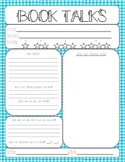
Book Talks - Presenting and Writing Book Talks   Book Talks
If you'd like a set of directions, rubric, and form for peer reviews, [this freebie] offers all three.

I hope you'll get this plan into practice and spark reading motivation this year.


10 Ways Teachers Kill a Love of Reading

We used to do our reading block in the morning, every day, but our library time was scheduled on Thursday afternoons.

So, in the morning, I worked so hard to foster a love of reading. And then on Thursday afternoons, we came back from library and I told my kids to put their new books away because it was math time.

The books they had just searched through the library to pick.

The books they were so excited to read.

And I made them immediately put it inside their desks or backpacks.

What was I thinking???

It wasn’t until I read The Book Whisperer that I realized exactly what I was doing. I was taking a moment full of book excitement, and I squashed it like a bug.

So instead, I started building in ten minutes in our schedule. We still had to fit math in- but I could lose ten minutes once a week if it meant giving my kids a moment to dive into their new books.

To make this time even more special? I brought in a book I was reading (or snagged one from the library I’d been meaning to read) and settled into a comfy spot on the floor to read with my kids.

You should’ve seen the looks on my students’ faces!

They were shocked. They were so used to me using our reading time to pull guided reading groups or confer with individuals, so for me to sit down and read with them was really surprising. But I instantly had kids gather around me, wanting to see what I was reading, or even just read “with” me (especially when I taught 2nd graders!)

It was a great time to not just tell them I’m a reader- but to show it and model it!

Ten minutes a week is a small price to pay for building excitement about reading.

Other ways I see teachers kill a love of reading?

kill a love of reading

  • Limiting kids to a certain reading level
    Oh, you’re interested in this? I don’t care. It’s not the right level.
  • Not letting kids choose their own books
    Imagine going to the library and someone picking your books for you.
  • Turning reading into worksheets about reading
    No matter how great a worksheet is, it can’t compare to real reading.
  • Not getting new and interesting books in the classroom library
    You need books your kids want to read. And if you “have enough books,” you probably don’t have the latest books. Bringing in new ones through the year builds more excitement, too!
  • Telling kids they can’t read ahead
    I always tell them they can- because, really, do I want them to stop reading a book when they’re dying to go on? They just aren’t allowed to give spoilers.
  • Requiring a reading log of homework minutes
    You never want to have kids looking at the clock, counting the seconds until they can stop reading.
  • Limiting reading to “real” books
    Graphic novels, websites, magazines, etc. are just as valuable as a book with a spine… and sometimes more. Reading is worthwhile- period.
  • Skipping the read aloud as kids get older
    Reading aloud is important for so many academic reasons, but it’s also one of the biggest ways to let kids just fall in love with books… and we can’t take that away! Make sure read alouds aren’t just for explicit lessons, but also just for the joy of reading (and introducing kids to wonderful books and series!)
  • Test Prep
    Need I say more?

If you’re not sure how you’re killing the kids’ love of reading, just listen for the moans and groans, and look for the times your kids are excited about their books. How can you build on those moments, and how can you create more?

Over at my blog today, I’m sharing some ways foster a love of reading. I’d love for you to come over to Luckeyfrog Learning and share your ideas!

jennybuttontitle

A Shift in Intervention: 3 Ways To Get Your Students Working Harder Than You


Hey guys! Tara here from Looney's Literacy just popping in to share how my summer school program is going so far! We're working hard and having a blast!


I used to stress over my lesson plans to the point of almost having a script that I could read from directly.  I thought I had to have every moment planned and ready to go before my students walked in the door. I laugh at myself now because even back then I never followed the "script" I had planned.

I'm sure it's no different in the classroom but with my experience in an intervention setting I learned very quickly that flexibility is key to a successful classroom. For many years I thought I was being flexible and allowing my students to guide the lessons. I was able to go with the flow and could analyze thought patterns on the go. I was mastering pulling materials and teaching "in the moment." But there was still that part of me that was working harder then the kids. I was looking at teaching backwards. I was guiding the thinking and only using "closed questions," or questions that imply that there is a predetermined "correct" answer. It was driving me nuts because my kids weren't thinking critically and I couldn't understand why.

So I started studying Essential Questions: Opening Doors to Student Understanding  by Grant Wiggins and Jay McTighe. (It's a must read if your ready for your students to start working  harder then you). I'm not going to bore you with the logistics of my planning (You can find that post here later ;)) But I do want to share with you how this study has transformed my intervention program.

Ask Essential Questions

Just like I've always done, I began planning for my summer intervention program by collecting year end data,  analyzing each student's scores and determining appropriate standards. With this info in mind I decided to practice what I had been studying about asking essential questions.  Essential questions are open ended questions that cause conversations, encourage critical thinking and problem solving. 

I began by asking myself what was my goal for my students at the end of this three week program. I decided I wanted them to understand why we read and write, why it's important to understand words and how they work and how we can become better readers and writers. 

I created notebooks for them so that they could brainstorm and have graphic organizers to take notes during discussion.

Click here for your FREEBIE!

And most importantly, I created questions that would have them thinking critically while addressing my goals for them! 
The first day was hard! I figured out how often they rely on me to ask literal questions so I that I'd guide them to the "correct" answer. I got a lot of "I'm confused" and "This makes my head hurt." I knew immediately I was doing the right thing by answering them with "I don't know." or "What do you think?"
Have  Students Guide Their Lessons

This was tricky for me. Like I mentioned previously, I want to have everything planned. Now don't get me wrong. It is our job to build the structure  of our lessons. But that's not what makes a house a home. The floor plan, the walls, the nooks & crannies; that is what makes a home. So build your structure and let your students add the finishing touches. They take ownership and they gain critical thinking and problem solving skills. It's a win-win! 

My  goal for one of my older students this week was to understand the main character and his role in the theme of the story we read.  His interpretation of the theme was very literal as was his description of the character. So I asked him to decide how he could think more deeply about the main character and the theme. 


Have Students Self-Reflect and Assess Growth

This goes hand in hand with  students guiding their lessons. This is the step needed before they decide how they need to proceed to reach their goal. Student self-reflection can and should be a formative tool used to aid in offering effective feedback that will promote deeper thinking and problem solving skills. 

This can easily be done before a lesson or as an "exit ticket." I've given prompts to guide students in a particular direction and I've left it wide open to the students perspective of how they are doing, what they did well and what they need to work on. Both ways serve their own purpose and both can be beneficial. 

On that note, I'm going to sign off. I hope this finds you in a place that you might find some tips to help you in your classroom. 


BASAL doesn't have to be a bad word

Hello Literacy Land Readers and Followers!  I'm Deniece from This Little Piggy Reads.
BASALS
Today's topic might scare some of my fellow authors or make a few of our readers hit that X in the top right hand corner.  Hear me out, before you hit the X.

Basal has become a bad word in the literacy world.  I understand the argument and I fully believe that if kids aren't engaged & interested they aren't really reading, just calling words.  However, I'd like to explain why I used a Basal in my Reading Classroom. 

First and foremost, I taught in a school that gave me a basal & expected me to use it.  We have a library, but for the past 5 years schools in Texas were suffering from a budget crisis and simply didn't put money into buying new books.  Luckily, that seems to be changing.  Our students are very transient.  I looped with my 2nd graders to 3rd grade and out of 60ish kids, 24 of them were new to our school in 3rd grade.  So, although I had worked hard with my original 60, now I had a large chunk of kids who were reading below or WAY below grade level.  My final reason for using it was simply financial.  We didn't have class sets available and I didn't have the money to buy them.  Yes, I bought a class library for my students, but I simply couldn't purchase enough books for an entire school year.    

Our school adopted Treasures and I liked the program.  I made it work for me.  I loved their spelling and vocabulary programs.  I loved the online component and utilized it for my below readers and ESL students during stations/workshops.  The online story would highlight words as it read the story aloud.  I fully intended to flip my classroom using this component before I became a GT Specialist.  

I liked most of the stories in our basal; however, when I thought a story was boring or lacked engagement based on my student's interests I used the opportunity to include non-fiction, like magazine articles or online articles and a little poetry.  Since basal stories are short, you can run through the lesson cycle in one week. Our former Principal was ALL ABOUT the lesson cycle.  

Kick up your basal stories by making them meaningful to your students.  In the younger grades, teachers do amazing jobs of engaging and entertaining their students!  They make crafts, snacks, sing songs and make centers or even games for the stories they read.  As kids get older, we (the teachers) shift focus onto state testing and less on engagement ideas.  Before I left my Reading classroom, I was committed to re-claiming the engagement and entertainment.  

Ideas I came up with to engage students with basal stories:
-Art Projects
-Story Stones
-Snacks that Correlated to the Story
-Book Reviews
-Technology
- STEM Design Challenges        

BASAL doesn't have to be a bad word.  In fact, you can do some amazing things with basal stories that will have positive effects on your students.  


5 Ways to Motivate Kids to Read in the Summer


Hello, everyone! It's Andrea from Reading Toward the Stars!  It's hard to believe that summer is here for me.  You may still have some time left, but it won't be long!


My son has already started to tell me that there is "nothing to do" after being two days in!  Guess what?!  He is wrong! There is an entire world out there, and so much of it can be found in books.   I am here to share five ways to motivate your students or children to read this summer.
Read on to see the five ways I motivate my own children to read, read, read!


The first thing I do every summer is visit the library.  Just going to the library allows children to choose their very own books from so many books.  They are free, so if your child doesn't like a book, there is no money lost.  And most libraries have a summer reading incentive program where children can earn prizes for reading.

Finding that magical book or series is the moment that defines reading for students. Giving children choice helps them embrace that love of reading too.  We were given a suggested list to read, which my son turned his nose up to.  He already has his books ready for the summer. Here are a few he plans to read this summer.


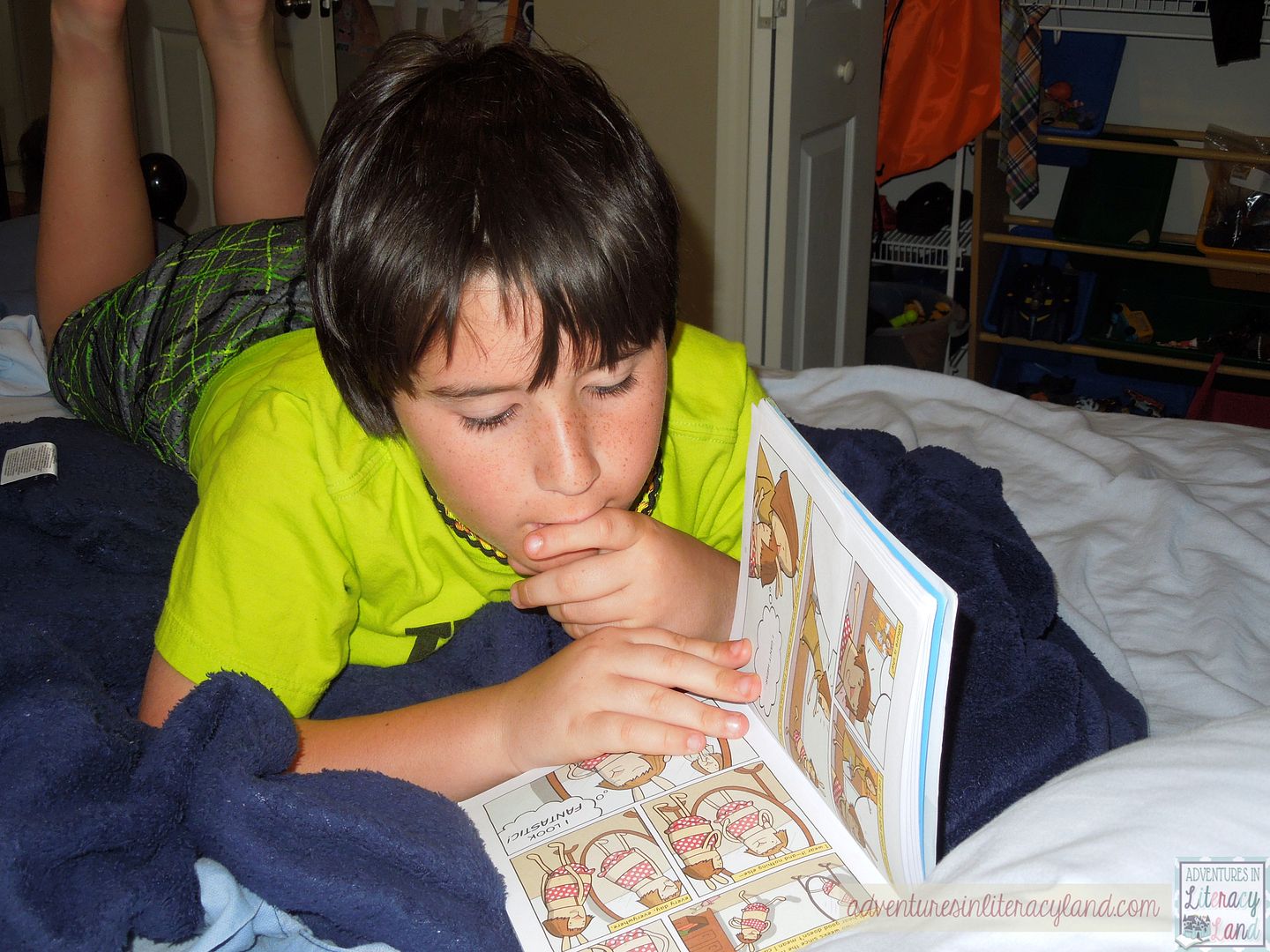
My son has to have the right place to read.  One summer he took this old box and made his reading nook.  He loved doing this and spent much of his reading time there.  He also enjoys reading in the comfort of his own bed.

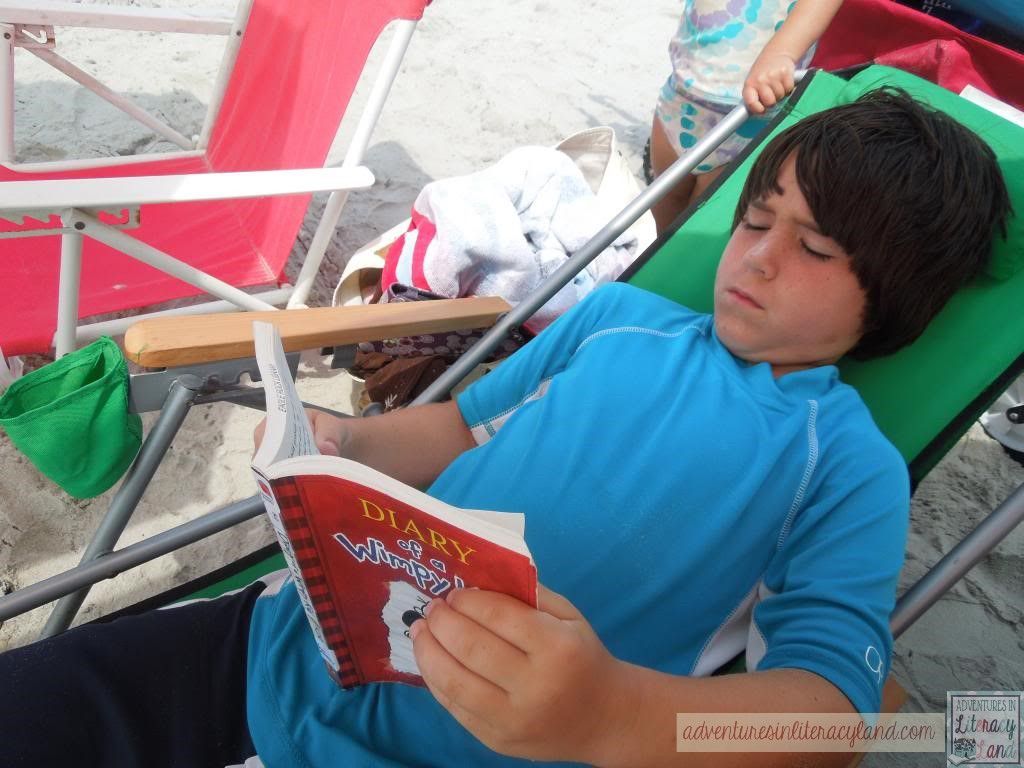
Another summer he hurt his legs at the beach and found that the beach was a perfect place to read.

The places are endless!  Go outside, stay inside, anyplace is a good place to read!

Reading socially is great for children, especially as they get older.  Now that my son can text, he and his friends can have book discussions and give recommendations.  Our next door neighbor is a middle school teacher and gives her son and my son different books to read.  After they read them, they switch and discuss.  How cool!

Another way to get kids to read socially is to form a little book club with a play date.  Children can discuss the books they have read.  Last year, Emily wrote a great post about hosting a book swap at your house or at school. This is another great way to discuss books and get new books at the same time!

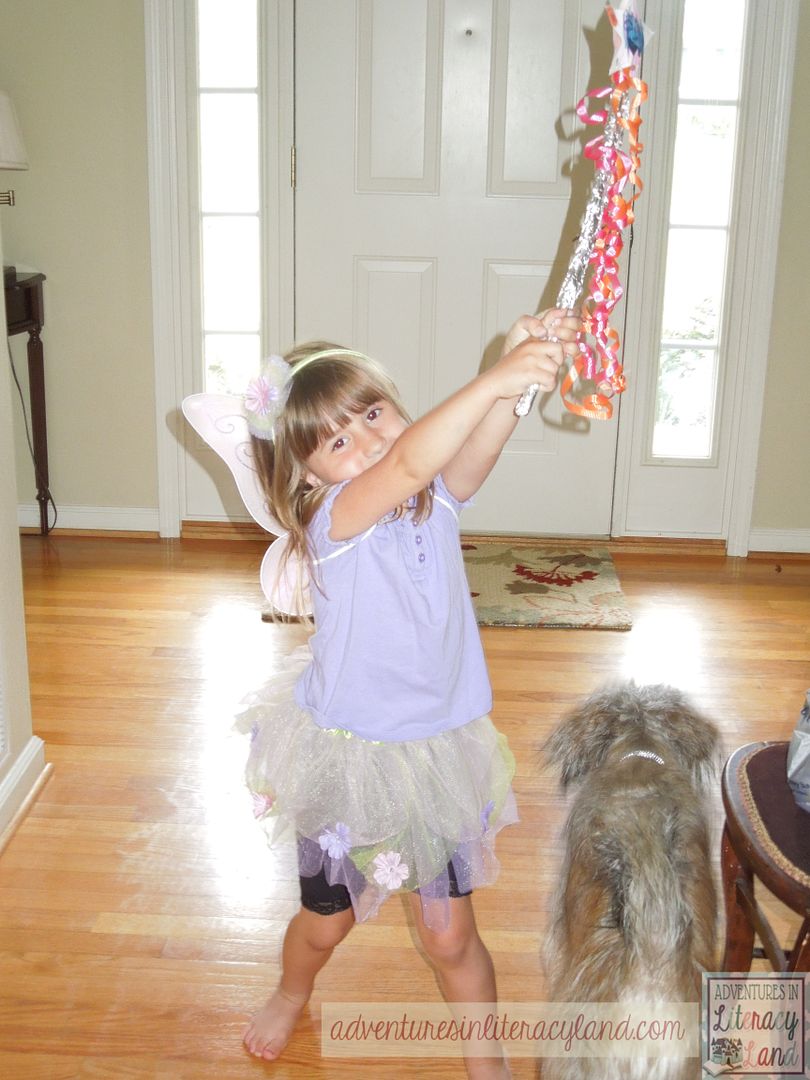
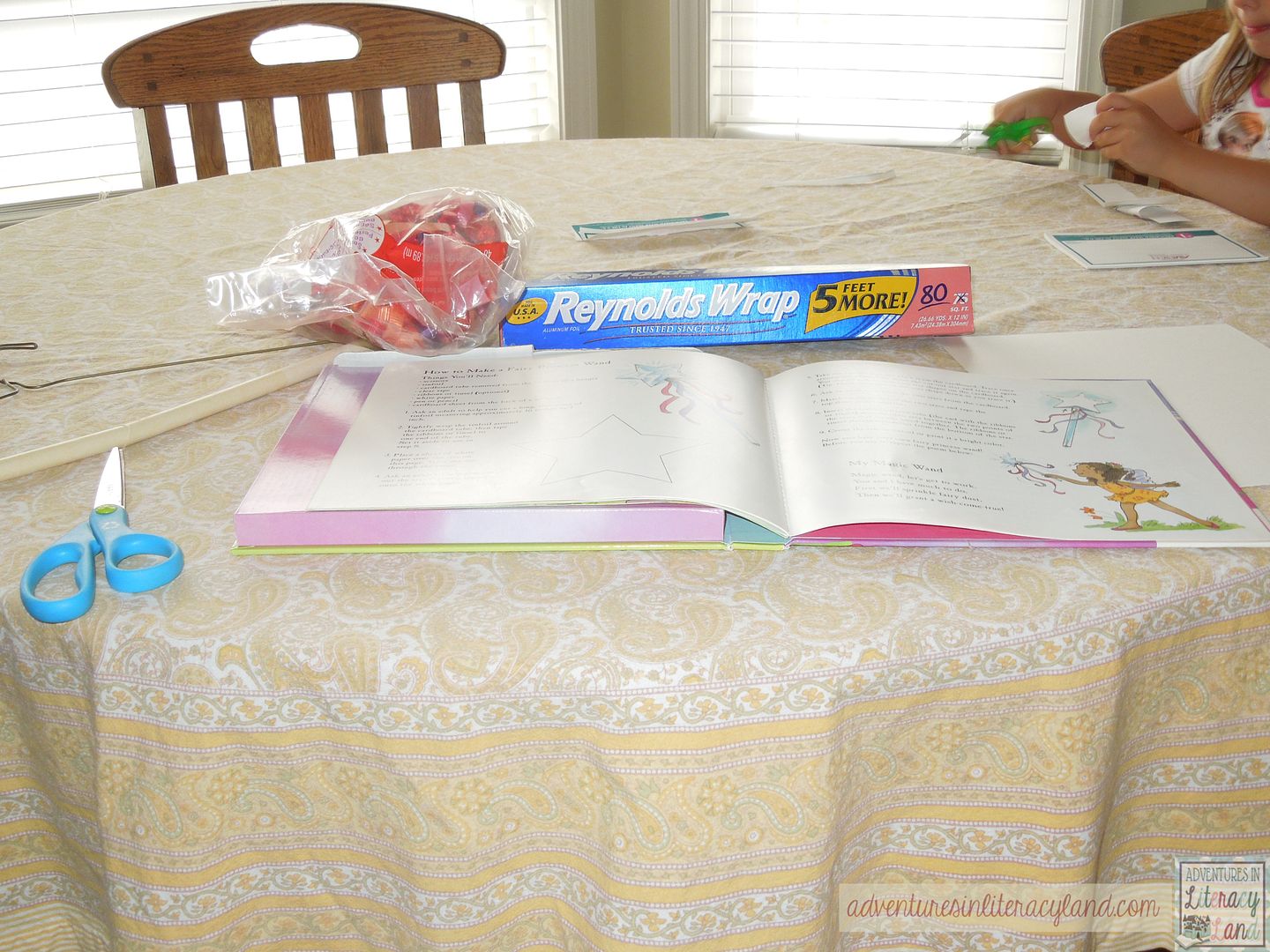
Children can read anything to be reading!  My daughter is so excited when I read directions to her, and she can help me make something.  We had so much fun making this simple wand with household items while reading directions.  It was fun, and we were able to spend time together.
 

Get books that have some summer learning experiences with them.  Go outside and learn! If your family is going camping, read about what you need to do go camping.  Does your child like Legos or Minecraft?  There are books for those too!

But, to make it fun, it can also just be fun to read and enjoy it.  No projects or essays ~ just the pure enjoyment of reading, wherever and whenever they want!  That is the best motivation!

Enjoy your summer, and don't forget to read, read, read!


HELP! I don't know what to write about!

HELP! I don't know what to write about!

The key to teaching writing is to take away the fear and the excuses.  "I don't know what to write about," is the worst excuse EVER!  If your students give you this excuse, you need to rethink your brainstorming activities for Writer's Workshop.

Three ideas

1. Topic Cards 

I am an admitted thrift store junkie.  I have some thrift stores in the area I frequent for specific things. I go to the book section first.  Can't pass up children's books for 78 cents!  I also look for word books, but that's coming later.  Then I look for "Topic Cards."  Most people know these as flashcards, but they are really topic cards in disguise.  I put the cards in a container labeled "Topics."  If students want a new topic, they can choose a card.  Easy.  Last week I found old cards for a peg board (young teachers won't know what I'm talking about).  These cards didn't have words, but it was easy enough to add the words with a permanent marker.

2. Word Cards and Word Books

Seasonal or Topic-based Word Cards can provide students with many, many topics.  These word cards can be related to your state standards or could be fun word cards, like FIRE FIGHTERS!  This word card excites boys and girls. These Word Books or Picture Dictionaries are perfect topic books.  These books contain words with clear photographs.  

3. Vocabulary and Classroom Anchor Charts

Finally, using Vocabulary Anchor Charts in the classroom can provide a wonderful topics for your students.  They could want to write a new chapter for "Dinosaurs Before Dark" or they can write their own Jack and Annie story.  They might even want to write a completely different story about dinosaurs.  

I hope these ideas will end the "I don't know what to write about" excuses.