
Wonder...Wonder...Wonderopolis!


What is Wonderopolis, you ask?  

I asked the same thing when a friend of mine at work mentioned it.  Immediately after leaving the copy room, I Googled it, and I was amazed!  Actually, my entire mind was full of wonder!  I could not believe what I saw!

My friend, a Special Education teacher, uses it with his students to give them some engaging material to read.  He loves it because of the many features it has, and his students can find just about anything they want to read.  Yes, they have CHOICE!  That is huge!

So, I thought, what can I use this for?  Well, there are so many ways I can use this resource to help my students as they learn.

One of our standards in the third grade is for students to read what I call "Real Life Reading", which includes such things as brochures, flyers, schedules, recipes, and websites.  The third grade teacher and I spent an entire week working on "Real Life Reading".  I used Wonderopolis with my students as the website to read.  They used the iPads to look up different "wonders" and read about them.  Here are some things we loved about it!

Look at all of the great topics!  Yes, that is Minecraft as a topic!  What kid couldn't find something to want to read?!  And there are so many more!

For those students who can't read it all, they can listen with wonder!  Plus, they can listen to a fluent reader too!

You can click on any word that has an orange dotted line and see what it means.  Plus,there are "Wonder Words" for each "wonder" where students can learn and then do a matching activity.

Before reading, students use guiding questions to help them think about what they will be reading.  Plus, it connects to current standards.

Each passage has a short little quiz they can do to see what they remember.

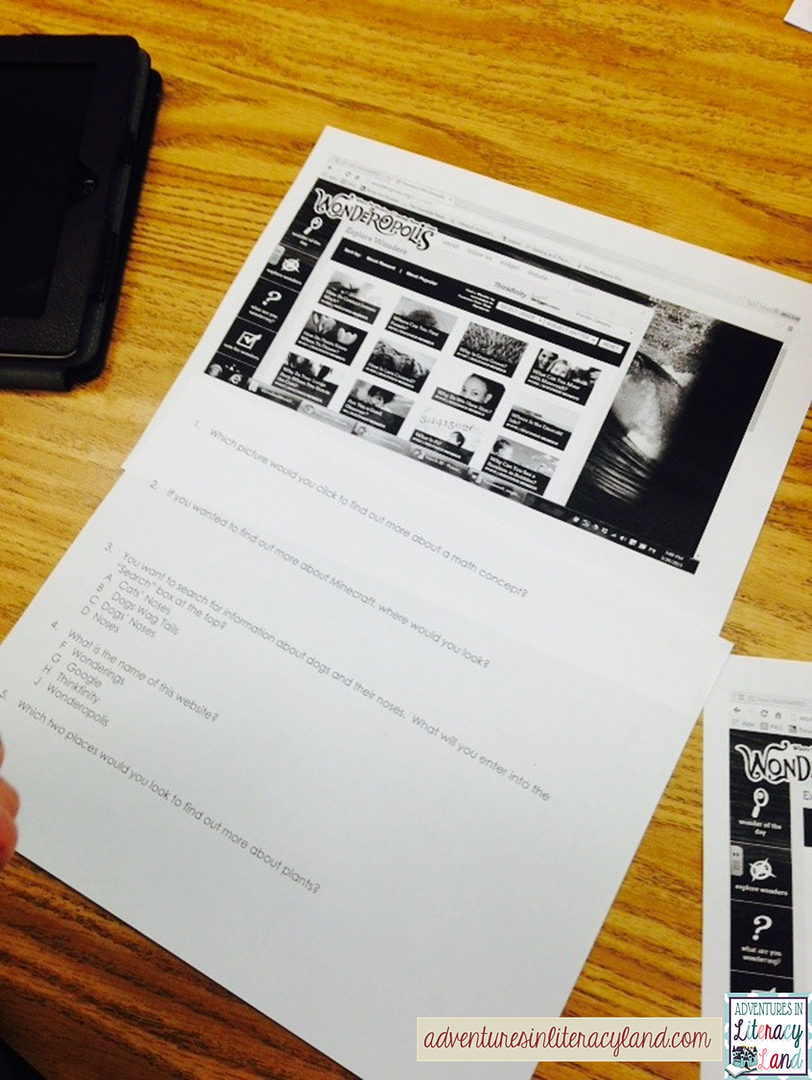
After they looked at the website and read about something they wanted to learn more about, they answered these real life questions about the screen shot.
It is amazing what they can learn when they are able to "wonder" a little!

What will you do in Wonderopolis?



Know Your Readers and What Motivates Them

Knowing your readers is the key to motivation. If you know they're reading preferences and interests, you are much more successful with motivating them to do more. Recently, I've taken some time to reflect on how we as parents and teachers have power. We are like superheroes in that we have special powers to influence our children and our students. So often, we fail to give ourselves credit for the little things we do to make our kids readers. Our children know what is important to us and even if they resist and act like we know nothing, more often than not, they end up meeting us at least half way. They want to please us and since we are in charge of their time. We have the ability to guide them through modeling, small discussions to learn their preferences, and with strategic purchases. We have the ability to take them to the library where they can be immersed with literature and keep a supply of reading material, whether it's the latest title from a favorite author, a current magazine, or a comic book, on hand in reading places at all times. We know our children better than anyone else if we just watch and learn them. Today, I'd like to share a few thoughts on motivation.

Putting It All Together

Can you believe spring is here and the end of the school year (for me) is in sight?!  It amazes me each year how quickly it goes.  I love the end of the year because it is a time to look at all the growth that has been made. 

But along with analyzing all of the growth, spring is an important time for me to reflect on my teaching.  This is the time of year that I begin to start thinking and planning for the changes that I want to make for the following school year.  This is such an important part of job because we are learning right along with our students.  Our teaching changes with the new knowledge that we gain, the students that we work with, and with new challenges that arise.

Last March I wrote about how my teammate, Karen, and I make nonsense words "real" in our classroom.

http://www.adventuresinliteracyland.com/2014/03/helping-to-make-nonsense-words-real.html

Over the course of this school year, Karen and I have used this technique with our guided reading groups.  As we teach, I can hear her conversations with her students and she can hear mine.  Through this unintentional listening our teaching of nonsense words evolved a little.  I realized that we were doing everything that we could to break down a "big" word but then working just as hard to put it all back together.  We wanted needed our students to really SEE the connections that we were trying to make.  This was born...


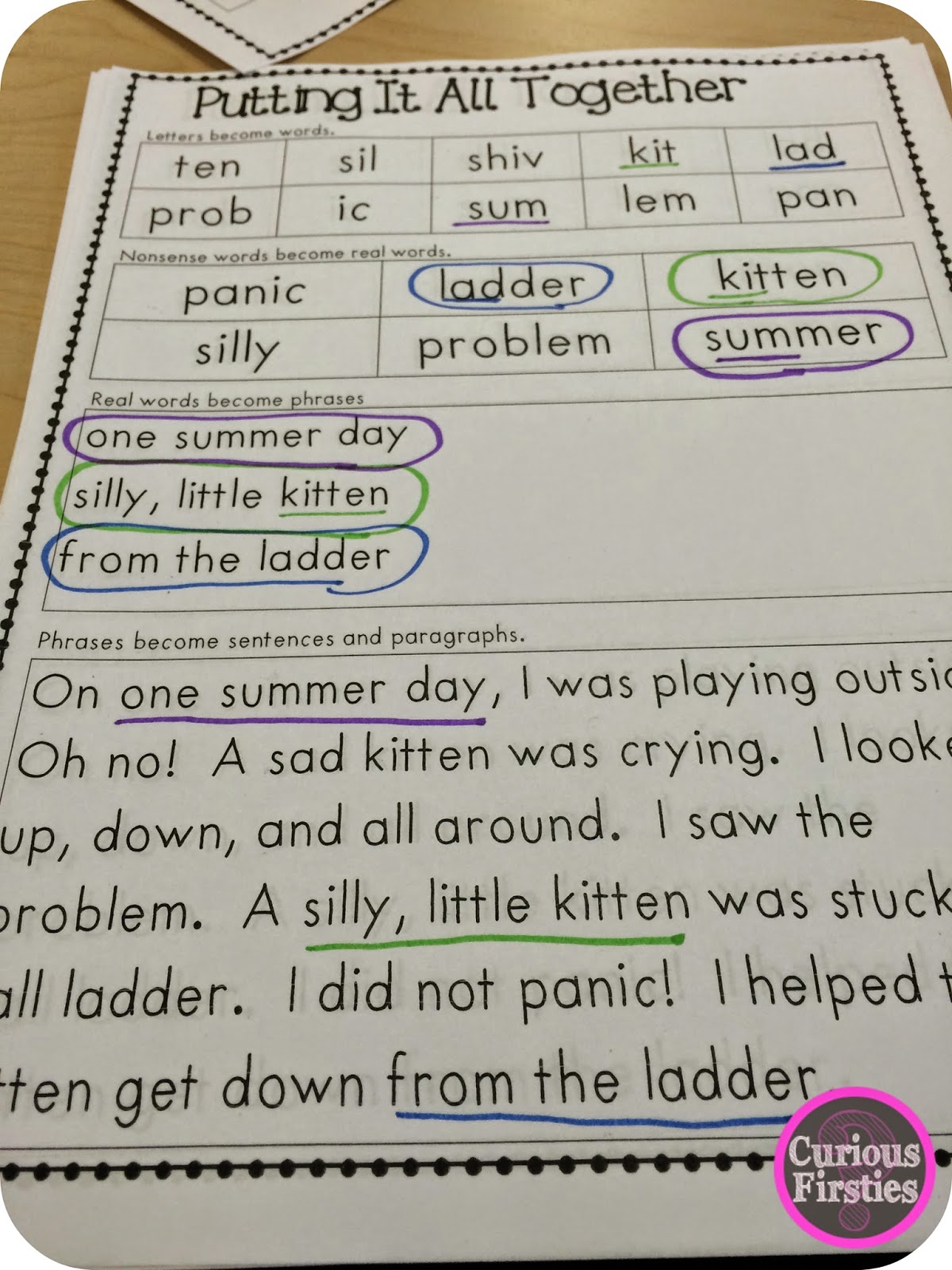
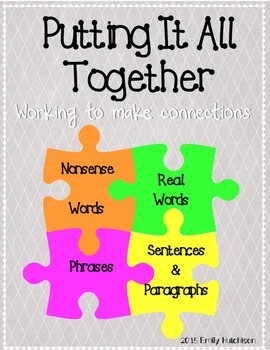
When looking at this sheet, you can see that it starts with nonsense words.  Those nonsense words become larger, 2-sylalble words.  Those 2-syllable words are in phrases.  Those phrases are found in a paragraph.
We wanted to start small but show them how all these parts come together and can be found in a paragraph.

As soon as I made it, I tried it out.  Would they make the connection?

I gave them one colored marker and (as you can see above) we used that same color all the way down the page.  Then we did this process again with a different color.


My guided reading groups loved it and really did make the connections.  My goal will be to do these sheets earlier next year now that I can see the impact that they have.

I hope that you can use these with your students and that they will help students understand the importance of a nonsense word and how often we really do use them when we are reading "bigger" words.  You can grab a free copy of these below:

https://www.teacherspayteachers.com/Product/Nonsense-Words-Making-Connections-to-Real-Reading-1770218


Are there any other ways that you help students to "put it all together?"


Super Story Sacks!

Hello! 

It's Pixie Anne from Growing Little Learners here today to share some ideas on using story sacks in the classroom!

Elmer Story Sack Contents

You may well use story sacks regularly in class already and have a whole stash of them for your children to explore... However, if you are new to teaching, or are new to teaching younger children (like I was last year), you may not have any experience of them and I hope this post will be useful for you!

What are Story Sacks?

A story sack is a bag full of goodies to support children when reading, retelling and exploring a favourite story. They can be used by children independently but are often useful when used with an adult as this can lead to high quality book talk and development of not only reading skills but speaking, listening and writing skills too!


When to use them:

I have seen our selection of story sacks hanging in the corridor for years! However, it was only recently that I decided to explore them and realised what I was missing by not building them in to my classroom practice. I now have one in my book corner which is out all the time and use the others for independent groups to explore during guided reading. They really enjoy it and while they can drift off task on occasion as they are working on their own - the different elements that make up the story sack mean they usually have plenty there to keep them engaged for the 20-25 minutes or so we spend on guided reading. They really look forward to their turn with the sacks each week!

What makes a Story Sack?

We have been lucky enough to have had some lovely parent/grandparent helpers in the past who put together most of our story sacks. They can be pricey to buy so if you can get some volunteers in to help then this is much better! You can add anything to a story sack that supports the exploration of the book but there are a few things that make up a typical story sack.

Here is the content of my favourite story sack for The Queen's Knickers:

A large sack with the title of the book on the outside.


A copy of the book.


Puppets, dolls or figures of the main characters in the book.


Props or a backdrop for the setting of the story to support retelling. 
( I just love the time and care taken over making all of the Queen's knickers - including the little parachute!)


A game or other activity for the children to play (with instructions).


There is a bingo game and sequencing activity here linked to days of the week and months of the year but the possibilities for different activities and response work are endless!


Non Fiction books linked to the main book.


I really would recommend making (or finding helpers to make) some for your classroom. They are easy to put together and have so many benefits for supporting literacy development. The next step in my school is to set up a borrowing system for parents. I am sure children would love to take these home to share with parents and siblings and it would be a great way to help parents and carers get involved with their children's education and build up contact between home and school!

I would love to hear how you use story sacks in your classroom, what your favourites are and ideas for ones I should start making!

Please leave a comment below to share and thanks for stopping by today!