Reading is Thinking!


Hello, all!  It's Andrea from Reading Toward the Stars with a little bit of thinking while reading for everyone!

At this point in the year, I spend a lot of time with my students working on thinking about what they are reading.  We do a lot of comprehension activities that include so many different hands on ways to get kids excited about reading.  We love using this thought bubble to show that we are thinking while we are reading.  You can read more about that on my blog in this {post}.
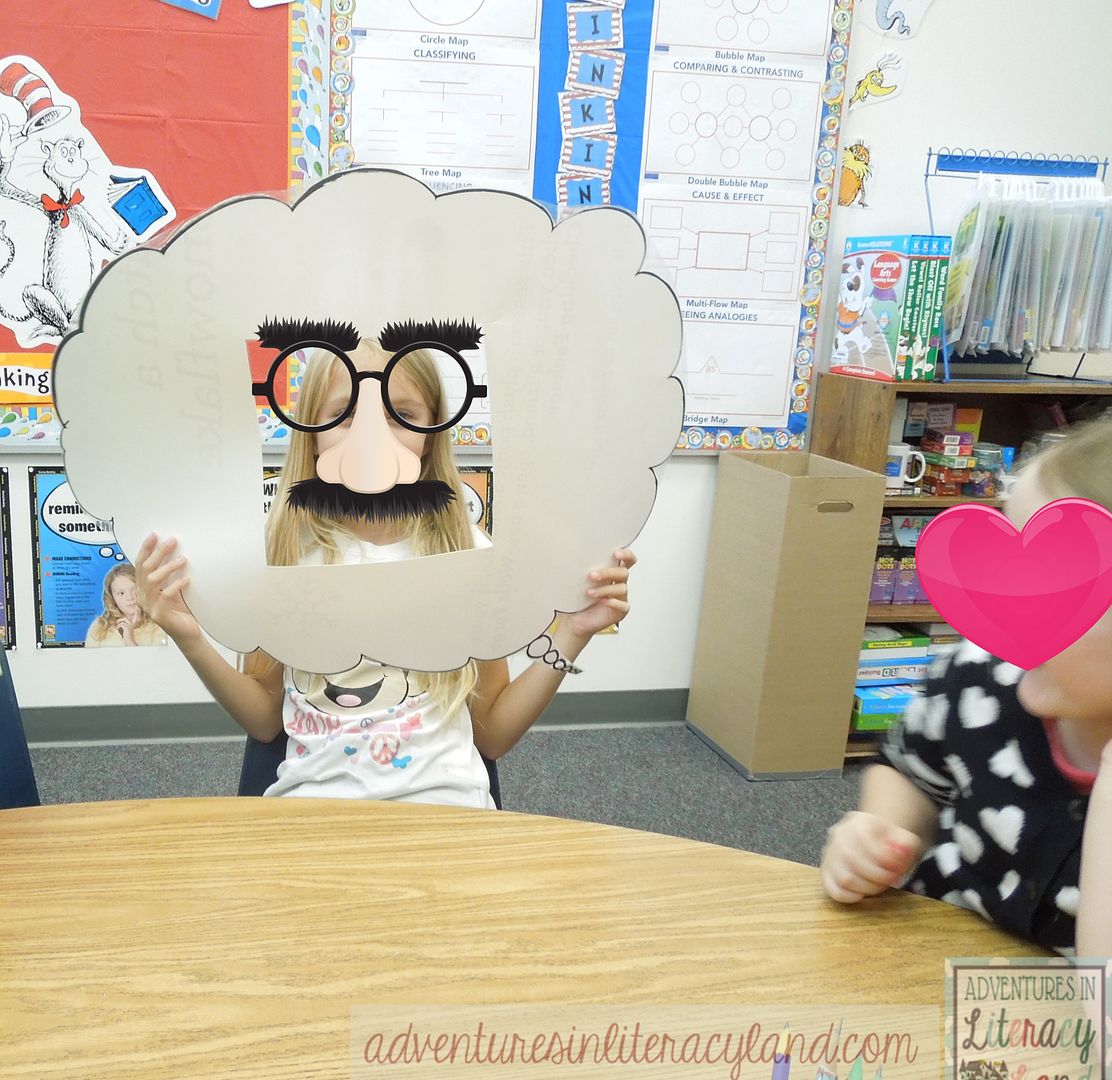
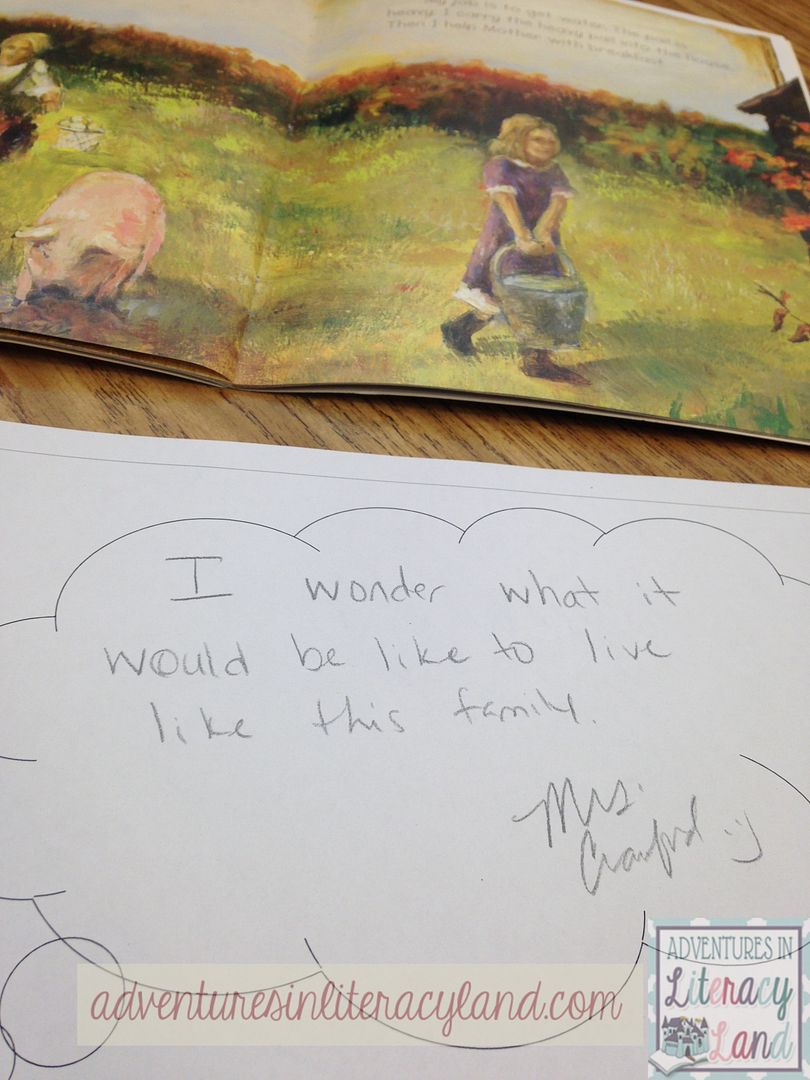
I read the book Ruby the Copycat to my third grade students, and they used it to tell us what they were thinking while I was reading.

In Ruby the Copycat, Ruby is the new girl in school.  She copies everything the girl in front of her does, resulting in a loss of friendship.  Then she copies her teacher, and her teacher makes it clear that she needs to be herself.

The next day they read books of their choice and wrote something they were thinking while they were reading.

 I love it because we filled up my "Reading is Thinking" bulletin board.  Here is what it looks like now that we have done some reading and thinking!
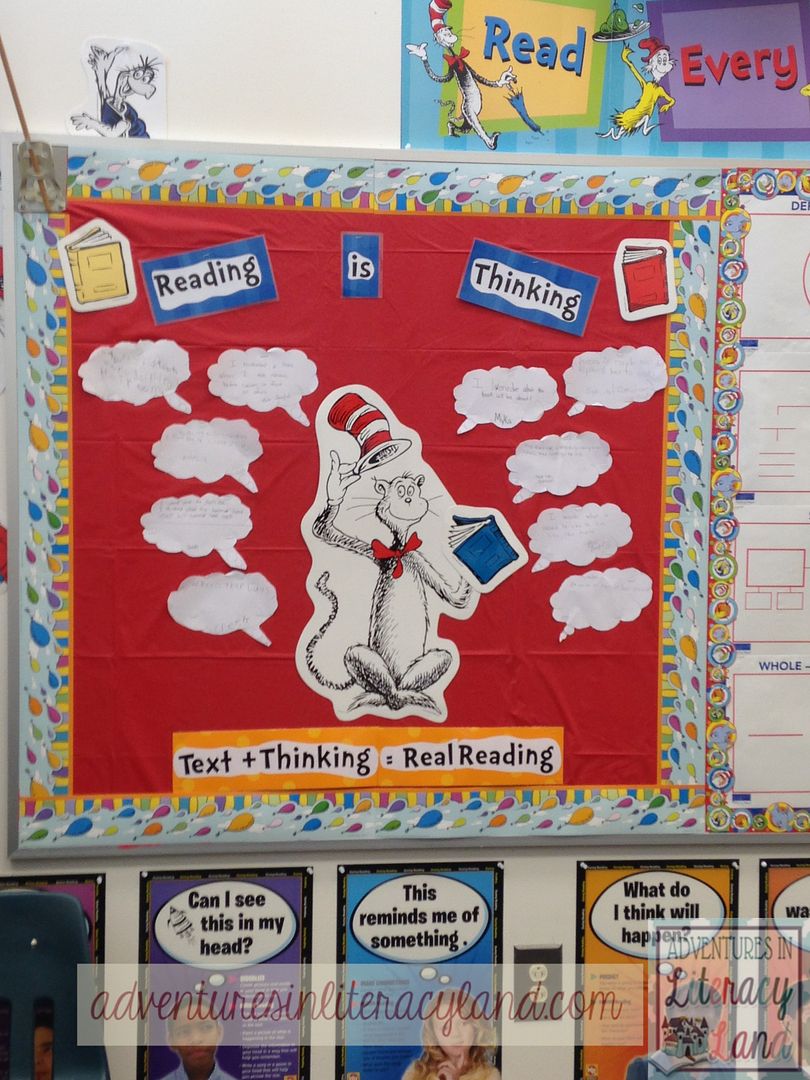
What fun it is to see what they were thinking while they were reading!  Some of them retold the story, while others told us something the characters could do to solve a problem.

I am linking this up with my own blog's Book Talk Thursday!  If you have good books to share, please feel free to link up anytime! It is open through much of November!


Reaching Readers with Online Books

Greetings from one long, lost blogger!

Hello!  It's me--Jennifer--from Stories and Songs in Second!


My summer hiatus from this royal kingdom of literacy lovers is now over! 

Know that I am glad to be back to share a wonderful website that I recently discovered!  I've used RAZ Kids, a program purchased by my school district, as my "go to" online reading resource for many years, but am going to add EPIC to my student's list of Daily 5 Listen to Reading choices this year!

I've been very impressed with the variety of literature choices provided at Epic--Books for Kids, and really like that many of the titles included in their different libraries are current, quality trade books.  There is a balance of fiction and non-fiction, and you can tailor your menu to your student's interests.


In order to show you how easy-peasy it is to sign-up for your account, I took a series of screen shots so that you'd have a picture tutorial!  I am not the most techno-savvy person, but was able to set up my account on my home laptop, and plan to access it on my iPads at school as well!  There is also an iPhone app!


I love the Scaredy Squirrel series, but don't own many hard copies.  I am looking forward to sharing more of the stories with my second graders using EPIC on my classroom SmartBoard!  I am also looking forward to sharing information with my students' families so that they can access our account at home and READ, READ, READ! 


I hope that you'll be able to use EPIC effectively this year to reach and teach more readers!  Click
{HERE} to get started!

In closing, I'd like to share this fun set of promotional posters I made for the annual literacy initiative in my building.  Maybe you can use them in your classroom or school as well?!?!   Click {HERE} to download it!  

The "We have read _____ picture books," "We have read ______ chapter books," and 
"Your teacher is reading...." posters were inspired by the ever-wise Pernille Ripp.   She writes over at Blogging Through the Fourth Dimension, and shares my love of picture books and fills her classroom with them.  I look forward to encouraging a classroom community of children who are passionate about books this year, and hope you will too!


As always, thank you for allowing me to share my story!  Continue to keep calm, teach on, and hold a song in your heart!  Feel free to visit me over at Stories and Songs in Second this week where there is a back-to-school celebration going on!


Educational Resources from the National Park Service

It's Jen from An Adventure in Literacy. I've spent the last three summers traveling coast to coast on cross country trips. One of the highlights of these trips is the opportunity to hit all of the national parks. Most people know about the amazing beauty and natural resources that national parks offer, but I'm here today to share some of the educational resources too.


The majority of national parks have bookstores in their visitor centers. In addition to park resources, most of them have an AMAZING selection of children's books. There are nonfiction books to learn more about the features and characteristics of the park. There are also fiction books related to the parks. I'm talking about quality children's literature.


Carlsbad Caverns even had a book display by the elevators highlighting a few books!


Some visitor centers will give you 15% off with a teacher id on some items. As with all teacher discounts it depends on the park and can change at any time, but it never hurts to flash that teacher id and just ask!

If you have children of your own they can take advantage of the free Junior Ranger program. The program is individualized for each park, but it usually requires some sort of learning activities specific to the park and a junior ranger patch. You can read more about the program here.

If you're not near the visitor center resources, the National Park Service also offers some great web based resources. There is a kids page as well as a teacher page where you can search for lessons and resources. You can also visit the websites for individual national parks for educational resources. Just click on "Learn About the Park" then "Education".


National Parks are America's largest classrooms. Be sure to take advantage of all of the educational resources they have to offer. Do you have a favorite park or park resource that you use for education? Leave us a comment. We'd love to check it out!


Using Student Names to Teach Early Readers

Using student names in books to teach letters, sounds, rhyme, and other reading skills.
Creating a love of reading can begin with student names.  Student names can be as unique as each student.  Even if they have a "common" name, they make it their own.  Use what they bring with them to make them stronger.
Using student names in books to teach letters, sounds, rhyme, and other reading skills.

Read a Book

Everyone has probably heard of Chrysanthemum, by Kevin Henkes.  It is such a quintessential kindergarten book.  Watching Chrysanthemum love her name, then fret over her name, then finally LOVE her name again with the help of the wonderful music teacher is heart-warming.  I read the book to students then send home their name in bubble letters for their first family project.  They'll send it back in a week later, decorated and unique.  I also love A my  name is Alice.  It's a fun play on beginning sounds. I love giving the students a fun oral activity with the sound chart:  _____ is on the ____.  They'll write silly sentences like:  Austin is on the apple.  It certainly brings the giggle. Finally, my favorite book about names is an oldie:  Just Only John. It's about a little boy named John who doesn't like his boring name so he takes a magic spell to get a new name. Of course, in the end he wants to be "just only John." It's the cutest story.
Using student names in books to teach letters, sounds, rhyme, and other reading skills.

Name Chart

Please, please, please have a name chart.  Make it with them.  I'm not a fan of putting names on the word wall...because some names aren't easily decodable.  You can add a picture, if you'd like.  I usually highlight the beginning letter.  Sometimes, I circle all the A names, B names, C names, and so on.  We use the name chart to find letters in the alphabet.  I can use the name chart to help decide who is going to write a letter during interactive writing.  I can also use the name chart to find similarities and differences.  We can also use the name chart in the Fab 5 Center.  They have to write 5 Friends Names on the provided paper.  Do it.Using student names in books to teach letters, sounds, rhyme, and other reading skills.

Anchor Charts

Use their names all over the room.  How many letters in your name?  What letters are in your name? How many syllables are in your name?  How many vowels?  Use their name!Using student names in books to teach letters, sounds, rhyme, and other reading skills.

Art, too.

After reading Ten Apples on Top, a wonderful counting book, have the students draw their picture and count apples for each letter of their name.  (I usually use small Ellison(c) cut-out apples.)  They have to count, write, spell, create, order...and it's all with their name.Using student names in books to teach letters, sounds, rhyme, and other reading skills.

Writing Sample Plus!

This is the formative assessment our students will complete the first week of school.  At first, it's a listening, gluing and ordering activity.  They'll get the write paper, a pink "I" square and a blue "am" square.  Students will be asked to find the square with the circle in it and put a circle of glue stick inside the square.  Then, they will put the pink "I" square on the spot.  Next, they will find the square with an "X" in it and put an "X" of glue stick inside the square.  Then, they will put the blue "am" square on the spot.  Finally, they will write their name (with a model) independently.  They will also be asked to draw a picture of themselves.Using student names in books to teach letters, sounds, rhyme, and other reading skills.

First Partner Activity

Students can have a name model in their hands and you'll direct them to find a friend who:

  • has 1 letter the same as their name.
  • has 2 letters the same as their name.
  • has the same number of letters as their name.
  • get creative!

And we've just begun.  Are their any name activities you'd like to share?

I hope you have a wonderful September..and celebrate their names.