Using Twitter to Improve RtI Instruction

As we continue to celebrate Literacy Land's birthday this month, I'd like to introduce myself! My name is Daliene, but many teachers know me as Not JANE (Not Just Any Nerdy Educator).  I'm excited to join the Literacy Land blog and share my RtI instructional strategies as well as Professional Development ideas for intervention and reading teachers.


During my 11 years of teaching, I've had the privilege of teaching in grades K-8 in three different states and two countries.  I started my career as a middle school science teacher, transitioned to intermediate ELA, loved being a Gifted and Talented Coach K-5, and enjoyed two years as a first grade teacher before joining the world of K-5 RtI Reading and Math Intervention. (Just typing that list feels exhausting!)

Though each move provided the challenge of learning sometime new, it also gave me the experience with learner needs across the grade levels. It is often easier for me to see the big picture because I have lived it as a teacher at some point along the way.

This helped me realize my goal is to share with you about my passions vs. my expertise. Having such a variety of experience can at times make it difficult to define what my niche or expertise might be. One might say it is my ability to quickly adapt to the different ages and ability levels I work with in RtI. My true passion however, is my love of incorporating useful small-group strategies and education technology in my classroom, as well as sharing current and relevant professional development tools with my teachers and staff.


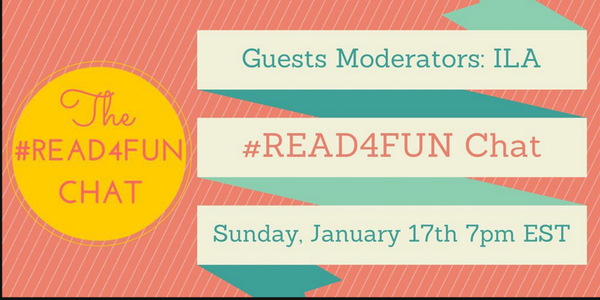
One of my favorite tools to use for professional development is Twitter! I love joining in weekly Twitter chats related to reading and intervention teaching. Whatever your interest or grade level, there is probably a Twitter chat for you! I love hearing fresh and new ideas from teachers all over the world.  Their Tweets often help me get out of a planning or creativity rut.  For example, tonight I'll be joining the #Read4Fun chat all about Reading Resolutions hosted by ILA.  I find it difficult at times to keep up with the latest and greatest literature out there, and these chats are full of other teachers and library media specialists who always have great recommendations!


Some people may be hesitant to join in a Twitter chat. The first few times it can feel overwhelming, especially if it is a popular chat and the feed moves quickly.  Have no fear! Many chat hosts will "Storify" their chat, which is essentialy a slide show of all the tweets that used their chat hashtag that day. This is a great way to quickly read through ideas and information shared.  If you want to know more about using Twitter, I'll be sharing a tutorial and more details in the coming weeks.

How has Twitter helped me with RtI? When I first started this job, I felt very isolated. I didn't have much district-provided PD or support for something that was completely new to me. I turned to the power of the internet and social media for ideas. I was quickly able to find other intervention teachers sharing ideas on Twitter, which then led me to their blogs, other collaboration spaces such as Voxer, and even a mentor I would have never found were it not for the power of educators sharing their knowledge and ideas online!

I look forward to sharing more about RtI and professional development with you. Cheers to a new year for Literacy Land and to each of you who come here to read and learn!


See It. Hear It. Do It.

I am so honored to be blogging with Adventures in Literacy Land this year!  My name is Sarah from Simply Literacy.  Literacy Land is celebrating their 2nd birthday and this month is filled with new and old bloggers highlighting their expertise in teaching.  I am so excited to introduce myself!  

For the past 9 of my 11 years of teaching, I have been at the same district, teaching third grade reading....and I have LOVED every second of it.  But I have not always had a love for reading.  In fact, it was quite the opposite.  In elementary school, I struggled so much in reading that I tried my hardest to avoid it at all costs.  Of course my parents and teachers did not let that happen.  Not only am I am a product of Reading Recovery, but I also received a lot of one-on-one support during the school day, plus a tutor in the evenings and on the weekends.   I disliked hated reading.   Luckily, all of the extra reading support helped me academically....but unfortunately it didn't change my feelings about reading.  My LOVE for reading didn't actually start until I went through my education classes in college.  After graduating, I entered the education world determined to help all students not only become successful, life-long readers, but I wanted to make sure I was able to help students build a love for reading.....especially the struggling ones.  I wanted students to change their minds from thinking reading is impossible to possible.

So.....how do I help my 3rd graders become successful readers? Each lesson I teach is thought out carefully.   Everyday I ask myself, "would the struggling-eight-year-old-Sarah from 25 years ago understand this lesson?"  I have found that it is as simple as incorporating learning styles that are appropriate for ALL students.

Let me show you how I include multi-sensory lessons in my teaching each day.  

Every year, I focus a lot on teaching my students how to make inferences while reading.  I stress the fact that authors do not always give readers all the information and that good readers have to infer or draw conclusions in order to understand a text.  Before starting this skill with stories, I emphasize to my students how we make inferences in our daily lives without even realizing it.   I start with a crime scene in my classroom.  This activity is taken from Tanny McGregor's Comprehension Connections. This crime scene usually takes place at the beginning of the school year. The students walk into my room on a Monday morning and see this in our classroom library:
Of course I always use my best acting skills, and show how upset I am that someone would leave this mess in my classroom.  I explain that we were going to be detectives by using the clues and activate our schema (background knowledge) in order to solve this case.  Little do the students know....but they are learning all about making inferences!  As the year continues, I have the students dig deeper by teaching inference through some multi-sensory lessons below.

-Who are my neighbors?- I create a story about a new family that moved in next door to my house.  I ask my students to help me learn information about my new neighbors by digging through some of their trash. This activity is a twist on Tanny McGregor's lesson in Comprehension Connections.

-Flocabulary- Flocabulary is a website that creates educational hip-hop videos, interactive activities, and online assessments for students in grades k-12. My students love to sing and dance along to the hip-hop songs.  Flocabulary is a multi-sensory approach that uses music, rhythm, and rhyme to increase student engagement.  The songs are so catchy!

-Picture Books-There are so many picture books that I enjoy reading to my students to practice and increase inference skills.  Such books include Tops and Bottoms by Janet Stevens, Enemy Pie by Derek Munson, and Animals Should Definitely Not Wear Clothing by Judi Barrett.  But my favorite books for inferring are wordless picture books such as Window by Jeannie Baker.

-Poems-"Impressive Inference" poems are great to use when teaching inferences.  When read aloud, poetry is rhythm, music, sounds, and beats which can be great for the kinesthetic learners.   This activity was found here.

Videos-  There are several short animated videos that I use to practice inference.  Check out my Pinterest board of videos here .

Comic Strips- The students love getting in groups and filling in the speech bubbles for certain comic strips.  This is a good activity for students to work together with peers and make inferences.   I took this lesson from Speech Room News.

Tic-Tac PowerPoint- I use this PowerPoint in several different ways.  Sometimes I will break the students up into two groups and we play as a class.  I've also played this game during small groups, intervention groups, and in partners.  I have a Tic Tac PowerPoint for almost every reading skill.

Games-Throughout the years, I have purchased a large number of board games that review reading skills.  These games are an exciting and engaging way for students to practice and apply reading skills.  My students really like to play Crack the Case! Inference Center.  In this game, they like to become detectives, piecing together clues to solve mysteries. 

The example lessons and activities listed above focus only on one reading skill.  I do my best to teach all my reading skills with this kind of variety.  Students rely heavily on their senses to process information when they are leaning.  I think a multi-sensory environment will increase my students' focus, attention, concentration, awaken their memories/schema, and possibly improve creativity.

I am so excited to be a part of this group and share more lessons with you this year!


Hello from Literacy Spark

Hi there!  This is Jessica from Literacy Spark.  I am so excited to have joined Adventures in Literacy Land as a blogger this year.  The blog is celebrating it's second birthday and this month will be spent introducing you to our bloggers, both old and new.  Make sure to check back in to get reacquainted as well as to pick up some tips and freebies.  There will also be a large birthday giveaway at the end of the month!
So here's a little bit about me...I've been teaching for nine years. All of this has been in first and second grade.  The first five years I taught in Connecticut and the last four were in Texas (where I live now).  Two.  Different.  Worlds.  
A little over a year ago, I had my daughter Gracie and we also moved about 45 minutes north of Houston.  So, I left the classroom and am a stay at home mom for the time being.  
But JUST before getting pregnant, I had completed my master's degree in reading and language arts and received my reading specialist and master reading teacher certificates. So...kind of sad they aren't getting use...but future dream when I go back to work is to be a reading specialist or literacy coach.  

Because my first job was in first grade (and in the inner city with English Language Learners), I had to learn how to teach reading really fast!  Well, it didn't happen that fast as I clearly had no clue when I started...but I got there and it really turned into my passion.  

When I moved to Texas, I taught second grade and entered a district without reading specialists or coaches (who had really taught me so much at my previous job).  There wasn't even a guided reading library...yep, no books!?!?  And I was in a state obsessed with grading and testing.  It was a challenge.  But I was determined to still teach my students to READ (rather than how to take tests), keep the FUN in learning, and try to convince some of the rest of the staff to join me.

I look forward to blogging this year and bringing you the perspective of a classroom teacher but with the eye of a reading specialist.  I get it, really...the grades, the testing, the paperwork, the behavior, lack of materials, no interventionists...but we can still do the best we can!

We are supposed to be blogging about our "speciality" but I sort of feel like I'm in the middle of everything and nothing at the same time right now.  So for now I'm going to say my speciality is getting kids engaged, motivated, up and moving, and having fun while still learning concrete skills and strategies.
Since Monday is Martin Luther King, Jr. Day, I've got a related freebie for you.  It's a little mini reader with ten right there factual questions.  Seems simple, but it really is a challenge to get young readers to actually go back and find the answers.  So this just reinforces the skill in a fun way.  
The questions are on full sheets of paper for you to put around the room in a scavenger hunt format to get your kids up and moving around.  Trust me, it makes everything a lot more fun.  Just post the ten questions somewhere around the room.  Read the book together, in partners, small group...whatever works.  Then have the kids get up with their books and go around hunting for the questions.  As they find the questions, they should refer to the little text for the answers, and record them next to the appropriate number on the back of the book.  Easy to prep, fun, reinforces a skill, and teaches some content!  You can grab it from my TpT store here.


Happy Birthday Literacy Land!


It is hard to believe that it has only been 2 years since we started this blog.  I feel like I have known these wonderful ladies forever!

If you are new to our blog, let me introduce myself.  I am Jessica Hamilton from Hanging Out in First!  I actually teach Kindergarten this year but I taught the previous 6 years in first grade, as well as 2 years of second and 1 of fifth.  I live in small town Virginia with my husband and 3 boys.

http://www.hangingoutinfirst.blogspot.com/

Since I have taught so many years in primary grades, I have learned a lot about it.  I have learned how to take a child that has never seen a book or a letter before and not only get them to read but to love reading!

There are many aspects of emergent literacy that a teacher has to be aware of in order to effectively teach it.  They can be summarized into categories:

Phonemic Awareness
-Understanding sounds and how words are made of seperate sounds.
-Knowing how to separate sounds and then learning to manipulate those sounds.
-Understanding rhyming - matching rhyming words, knowing if 2 words rhyme, and being able to produce rhymes.
-Isolating sounds - matching the beg/medial/end sounds of words, separating onset and rime, and being able to manipulate the onset and rime.

Phonics
-Alphabet - recognizing letters by name and by sound
-Blending (we call it stretching) sounds into words

Concept of Print
-Knowing the parts of a book - front, back, first page, first word, pictures, words
-Reading left to right, top to bottom
-Concept of Word - one to one correspondence while reading
-Knowing the difference between a sound, a letter, a word, and a sentence
-Understanding that the words on the page need to match the picture on the page.

Writing
-Handwriting - learning to physically write the letters of the alphabet
-Segmenting each sound and encoding it
-Understanding how to write a sentence - more than one word, spaces in between words, must make sense, periods/capital letters
-Illustrating the sentence that you write correctly
-Not being afraid of spelling errors

Comprehension
-Retelling a story in the correct order
-Knowing what a character is
-Understanding that you have to think while you read
-Understanding feelings of characters
-Understanding that we can read for fun or read to learn
-Learning to love reading!

Fluency
-Becoming fluent with letter naming, letter sounds, phoneme segmenting, blending, sight words, simple sentences

Vocabulary
-Remembering that these guys are only 5 and they are new to so many of the words that are found in stories!  Exposing them to language and not being afraid to tell them to "illustrate" their picture rather than to "draw" it!


The interesting thing about emergent literacy is trying to teach all of these skills while still letting them play and be children.  It can be easy to forget when we have so many skills to teach and so much growth that must be made, but I promise you that it CAN be done!

Rule number one of teaching emergent literacy:

They are just little and we want to SPARK their love for reading..... If you do it now, it will last forever!